






Netmeds First Membership
Quick Links
Introduction About ATROPINE EYE OINTMENT
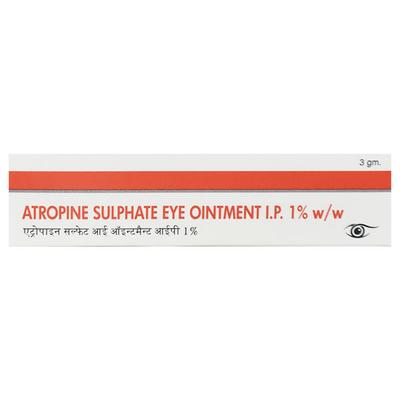
ATROPINE EYE OINTMENT contains Atropine which belongs to the group of medicines called Mydriatics and Cycloplegics. It is used to manage certain forms of eye inflammation such as uveitis or iritis. It relaxes eye muscles and can cause enlargement of the pupil of the eye which makes it a suitable diagnostic aid before certain eye examinations (such as cycloplegic refraction).
Atropine is an anticholinergic medicine. It works by blocking the effects of a chemical messenger called acetylcholine in the eyes. It relaxes the eye muscles and causes the pupil to dilate (mydriasis) which helps in the diagnosis of eye problems (refractive errors). It also reduces eye inflammation by blocking the movements of eye muscles. Your doctor may evaluate your preexisting health condition and regularly check your eyes during management with ATROPINE EYE OINTMENT to avoid the risk of unwanted side effects.
ATROPINE EYE OINTMENT is not recommended for use in patients suffering from glaucoma or in those who tend to develop glaucoma. If you are pregnant or breastfeeding, consult your doctor for advice before using this medicine. ATROPINE EYE OINTMENT may cause blurred vision and therefore it is advisable not to drive or operate any heavy tools or machines while using it. The most common side effects of using ATROPINE EYE OINTMENT are blurred vision and sensitivity to light. Consult your doctor if any of the symptoms worsen.
Uses Of ATROPINE EYE OINTMENT
Used to:
- manage eye inflammation (such as uveitis or iritis)
- enlarge the pupil of the eye before certain eye examinations (such as cycloplegic refraction) and post eye surgery
How ATROPINE EYE OINTMENT Works
ATROPINE EYE OINTMENT is mydriatic agent which relaxes the eye muscle and causes the pupil to dilate. It acts by blocking the effects of a chemical messenger called acetylcholine in the eyes. This causes the eye muscle to relax (paralyze) temporarily which helps in the diagnosis of certain eye problems (such as refractive errors). It also reduces eye inflammation by dilating the pupil and by blocking the movements of eye muscles.
How to use ATROPINE EYE OINTMENT
Use ATROPINE EYE OINTMENT as advised by your doctor. It is for ophthalmic use only. Apply a small amount of the medicine into the affected eye(s). Wash your hands before and after using ATROPINE EYE OINTMENT. Do not touch the tip of the medicine with mouth, nose or other parts of body to avoid contamination. Your doctor will decide the correct dose for you depending upon your age, body weight and disease condition.
Side Effects Of ATROPINE EYE OINTMENT
Common
- inability to tolerate light (photophobia)
- blurred vision
Stop using ATROPINE EYE OINTMENT and consult your doctor immediately if you experience any of the following side effects:
- allergic reaction such as nodule like inflammation of eye (follicular conjunctivitis), or swelling, discharge, redness of eye with itching (eczematoid dermatitis)
- severe decrease in blood pressure with difficulty in breathing
How To Manage Side Effects
Eye pain Or Sensitivity
Avoid watching direct light sources. Do not strain your eyes too much. Protect your eyes from bright light while going outdoors using sunglasses. Consult your doctor if this side effect bothers you.
Avoid driving or going outside on your own if you experience blurred vision after using ATROPINE EYE OINTMENT. Close your eyes for some time until your vision gets clear. Contact your doctor if this symptom bothers you.
Warning & Precautions

Pregnancy
Monitoring requiredATROPINE EYE OINTMENT should be used in pregnant women only if it is considered necessary by the doctor. Your doctor will prescribe ATROPINE EYE OINTMENT only if the benefits are greater than any possible risk to the unborn baby. Therefore, consult your doctor before using.

Breastfeeding
Monitoring requiredATROPINE EYE OINTMENT should be used in breastfeeding mothers only if it is considered necessary by the doctor. Your doctor will prescribe ATROPINE EYE OINTMENT only if the benefits are greater than any possible risk to the breastfeeding infant. Therefore, consult your doctor before using.

Driving and Using Machines
Use with CautionDo not drive or operate any machines, as ATROPINE EYE OINTMENT may cause blurred vision.

Allergy
ContraindicatedDo not use ATROPINE EYE OINTMENT if you are allergic to Atropine.

Use In Pediatrics
Use with CautionATROPINE EYE OINTMENT must be used with caution in children and adolescents (below 18 years). Consult your doctor before using it.

Use In Geriatrics
Use with CautionATROPINE EYE OINTMENT should be used with caution in elderly patients (65 years and above). Consult your doctor before using it.
Others
ATROPINE EYE OINTMENT is not recommended for use if you:
- have primary glaucoma (increased pressure in the eye) or a tendency to develop narrow anterior chamber angle glaucoma
Interactions
A. Drug-Drug interactions:
Inform your doctor about all the medicine you take such as prescription medicines, over-the-counter medicines or herbal supplements.
Overdosage:
If you or anyone else accidentally used or ingested more of ATROPINE EYE OINTMENT, consult your doctor immediately or visit the nearby hospital. Symptoms of overdose are flushing and dryness of the skin, skin rash in pediatric patients, abnormal or fast heartbeat, blurred vision, fever, abdominal distension in infants, hallucination, and loss of neuromuscular coordination.
Synopsis
| Drug | : | Atropine |
| Pharmacological Category | : | Muscarinic Receptor Antagonists |
| Therapeutic Indication | : | Mydriasis, Cycloplegia, Eye inflammation |
| Dosage Forms | : | Eye Drops, Eye Ointment, Injection |
More Information
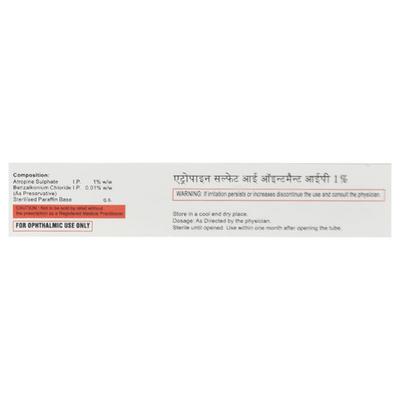
- Keep ATROPINE EYE OINTMENT out of reach of children
- Store at room temperature
FAQs About ATROPINE EYE OINTMENT
Q: Can ATROPINE EYE OINTMENT manage myopia?
A: Current studies suggest that there is no permanent manage for myopia (progressive blurring of vision). However, few agents like atropine can be used for the onset of myopia. ATROPINE EYE OINTMENT cannot manage myopia however at low doses it is shown to effectively reduce the progression of myopia, especially in the children. If you are doubtful, consult your doctor before use.
Q: Can ATROPINE EYE OINTMENT be used to reduce eye redness?
A: Yes. ATROPINE EYE OINTMENT is used to manage inflammation of the eye and its symptoms such as eye redness, itching and pain.
Q: Can ATROPINE EYE OINTMENT cause blurred vision?
A: Yes. ATROPINE EYE OINTMENT can cause blurred vision after application, and so avoid driving or going outside on your own. Close your eyes for some time until your vision gets clear. Contact your doctor if this symptom bothers you.
Q: How to use ATROPINE EYE OINTMENT?
A: ATROPINE EYE OINTMENT is for ophthalmic use only. Apply a small amount of the medicine into the affected eye(s). Wash your hands before and after using ATROPINE EYE OINTMENT. Do not touch the tip of the medicine with mouth, nose or other parts of body to avoid contamination. Your doctor will decide the correct dose for you depending upon your age, body weight and disease condition.
Q: How to store ATROPINE EYE OINTMENT?
A: ATROPINE EYE OINTMENT must be stored at room temperature. Caution must be taken not to contaminate the applicator tip of the tube. Keep this medicine out of reach of children. Do not swallow. In case of accidental ingestion, contact your doctor immediately.
A: Can ATROPINE EYE OINTMENT be used for glaucoma?
A: No. ATROPINE EYE OINTMENT is not indicated to use for glaucoma. In contrast, people having glaucoma must inform their doctor before using ATROPINE EYE OINTMENT as a precaution, as it might worsen their existing condition.
Q: What can be done if I forget to take a dose?
A: If you forgot to take your dose, take it immediately once you remember, until its time for the next dose. But do not take a double dose of ATROPINE EYE OINTMENT to make up the missed dose.
References
1. KD. Tripathi. Anticholinergic Drugs and Drugs Acting on Autonomic Ganglia. Essentials of medical pharmacology. Seventh edition. 2013. Page – 114 & 119-120.
2. Marcela Frazier and Siret D. Jaanus. Cycloplegics. Clinical Ocular Pharmacology by Jimmy D Barlett, Siret D Jaanus. Fifth edition. 2007. Page 125-130.
3. Fan, Dorothy SP, et al. Topical atropine in retarding myopic progression and axial length growth in children with moderate to severe myopia: a pilot study. Japanese journal of ophthalmology. NIH. National Library of Medicine. National Centre for Biotechnology Information. Pubmed.gov. January-February 2007. [Accessed on 9th May 2022] https://pubmed.ncbi.nlm.nih.gov/17295137/
4. Dawn, V. J., et al. A case report of granulomatous uveitis with secondary complications. World Journal of Pharmaceutical Research. April 2021. [Accessed on 25th April 2022] https://wjpr.s3.ap-south-1.amazonaws.com/article_issue/1622462776.pdf
5. Bausch & Lomb. Inc. Atropine Sulfate Ophthalmic Ointment, 1% [Revised in April 2020] [Accessed on 25th April 2022] https://dailymed.nlm.nih.gov/dailymed/getFile.cfm?setid=c0a56d60-0914-42b1-af59-c56afe93d18c&type=pdf
Useful Diagnostic Tests
- Healthy Midlife Checkup
- Full Body Checkup-Gold
Author Details