

Netmeds First Membership
Quick Links
Introduction About APIDRA 100IU CARTRIDGE
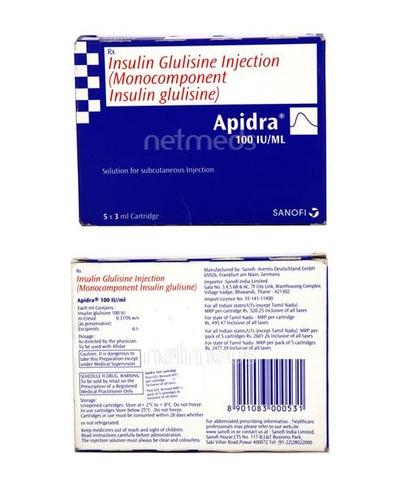
APIDRA 100IU CARTRIDGE contains Insulin glulisine which belongs to the group of medicines called Antidiabetics. It is used in the management of diabetes mellitus in adults, adolescents and children aged 6 years and above.
Diabetes mellitus is a disease where the body does not produce enough insulin to control the level of blood sugar. Symptoms include increased thirst, frequent urination, extreme hunger, unexplained weight loss, fatigue, irritability, blurred vision, slow-healing sores and frequent infections.
APIDRA 100IU CARTRIDGE is not recommended for use if you have hypoglycaemia (low blood sugar). APIDRA 100IU CARTRIDGE should be used with caution in patients with liver, kidney and heart disease, stroke and hypothyroidism. Consult your doctor before receiving it.
APIDRA 100IU CARTRIDGE should be used with caution in pregnant women and breastfeeding women. APIDRA 100IU CARTRIDGE is not recommended for use in children below 6 years of age. It should be used with caution in elderly patients. Consult your doctor before receiving APIDRA 100IU CARTRIDGE.
The most common side effects of receiving APIDRA 100IU CARTRIDGE are low blood sugar, skin and allergic reactions at the injection site (such as reddening, unusually intense pain on injection, itching, hives, swelling or inflammation). Contact your doctor if any of the symptoms worsen.
Uses Of APIDRA 100IU CARTRIDGE
- To manage diabetes mellitus
How APIDRA 100IU CARTRIDGE Works
APIDRA 100IU CARTRIDGE lowers blood glucose levels by stimulating skeletal muscle and fat for uptake of glucose and by inhibiting glucose production in liver. Thus, helps to control blood sugar levels effectively.
How to use APIDRA 100IU CARTRIDGE
Use APIDRA 100IU CARTRIDGE as advised by the physician. It should be taken shortly (0-15 minutes) before or soon after meals. It is injected under the skin (subcutaneously) in the abdominal wall, the thigh or the upper arm.
It may also be given into the vein (intravenously) in the abdominal wall by your doctor. Your doctor will decide the correct dose and duration for you depending upon your lifestyle and the results of your blood sugar (glucose) tests and your previous insulin usage.
Do not stop APIDRA 100IU CARTRIDGE without speaking to a doctor. Otherwise, this could lead to severe hyperglycaemia (very high blood sugar) and ketoacidosis (build-up of acid in the blood because the body is breaking down fat instead of sugar).
Side Effects Of APIDRA 100IU CARTRIDGE
Common
- hypoglycaemia (low blood sugar)
- skin and allergic reactions at the injection site (such as reddening, unusually intense pain on injection, itching, hives, swelling or inflammation)
Rare
- skin changes at the injection site (injecting insulin too often at the same place, the fatty tissue may either shrink (lipoatrophy) or thicken (lipohypertrophy)
Stop receiving APIDRA 100IU CARTRIDGE and contact your doctor immediately if you experience any of the following side effects:
- allergic skin reactions, including anaphylactic reactions such as rash and itching all over the body), severe swelling of skin or mucous membranes (angioedema), shortness of breath, a fall in blood pressure with rapid heartbeat and sweating
- hyperglycemia (high blood sugar) can cause diabetic ketoacidosis (build-up of acid in the blood). Symptoms include thirst, increased need to urinate, tiredness, dry skin, reddening of the face, loss of appetite, low blood pressure, fast heartbeat, glucose and ketone bodies in urine, stomach pain, fast and deep breathing, sleepiness or even loss of consciousness
- signs of heart failure such as unusual shortness of breath or rapid increase in weight or localized swelling (oedema)
Warning & Precautions

Pregnancy
APIDRA 100IU CARTRIDGE should be used with caution in pregnant women or planning for pregnancy. Contact your doctor before receiving it.
Your insulin dose may need to be changed during pregnancy and after giving birth. Careful control of your diabetes and management of hypoglycaemia, is important for the health of your baby.

Breastfeeding
APIDRA 100IU CARTRIDGE should be used with caution in breastfeeding women and may require adjustments in insulin dose and diet. Contact your doctor before receiving it.

Driving and Using Machines
Do not drive or use machines while receiving APIDRA 100IU CARTRIDGE as your blood sugar can be low or high which may affect your concentration and ability to react.

Alcohol
Avoid consumption of alcohol while receiving APIDRA 100IU CARTRIDGE as it can raise or lower your blood sugar levels.

Kidney
APIDRA 100IU CARTRIDGE should be used with caution in patients with kidney disease and may require dose adjustment. Consult your doctor before receiving it.

Liver
APIDRA 100IU CARTRIDGE should be used with caution in patients with liver disease and may require dose adjustment. Consult your doctor before receiving it.

Allergy
Do not receive APIDRA 100IU CARTRIDGE if you are allergic to insulin glulisine or any of the other ingredients of this medicine.

Heart Disease
APIDRA 100IU CARTRIDGE should be used with caution in patients with heart disease. Consult your doctor before receiving APIDRA 100IU CARTRIDGE.
Others
APIDRA 100IU CARTRIDGE is not recommended for use if you:
- have hypoglycaemia (low blood sugar)
Before receiving APIDRA 100IU CARTRIDGE, inform your doctor if you:
- have an injury, infection or fever
- have an operation
- are not eating enough
- have type-1 diabetes (i.e., your body does not produce any insulin)
- have a history of stroke
- have hypothyroidism
- have diabetic autonomic neuropathy (a certain type of nervous disease)
Use in paediatrics:
APIDRA 100IU CARTRIDGE is not recommended for use in children below 6 years of age. Consult your doctor before receiving APIDRA 100IU CARTRIDGE.
Use in geriatrics:
APIDRA 100IU CARTRIDGE should be used with caution in elderly patients aged 65 years and above. Consult your doctor before receiving APIDRA 100IU CARTRIDGE.
Interactions
A. Drug - Drug interactions:
Before receiving APIDRA 100IU CARTRIDGE, inform your doctor if you are taking any of the following medicine:
- medicines used for the management of diabetes Ex. metformin, repaglinide, glimepiride
- fluoxetine, phenelzine, selegiline (medicines used to manage depression)
- medicines used to manage high blood pressure, heart diseases, abnormal heart rate (Ex. benazepril, captopril, diazoxide, chlorothiazide, disopyramide, metoprolol, atenolol, clonidine, guanethidine and reserpine)
- pentoxifylline (used to manage blood flow problems in arms and legs)
- propoxyphene, salicylates (such as aspirin, used to relieve pain and lower fever)
- sulphonamides (used to manage bacterial infections) Ex. sulfamethoxazole
- oestrogens and progestogens (medicines used to manage pregnancy)
- corticosteroids (used to manage inflammation) Ex. cortisone
- thyroid hormones (used to manage thyroid gland disorders) Ex. levothyroxine
- sympathomimetics (such as epinephrine (adrenaline) or salbutamol, terbutaline used to manage asthma)
- somatropin (used to manage growth hormone deficiency)
- danazol (medicine acting on ovulation)
- fibrates (used to lower high levels of blood lipids) Ex. clofibrate, fenofibrate
- glucagon (used to manage severe hypoglycaemia)
- isoniazid (used to manage tuberculosis)
- medicines used to manage psychiatric disorders (Ex. chlorpromazine, fluphenazine, olanzapine, clozapine and lithium salts)
- protease inhibitors Ex. darunavir, indinavir (used to manage HIV)
- pentamidine (used to manage some infections caused by parasites)
Overdosage:
If you or anyone else accidentally injected too much of APIDRA 100IU CARTRIDGE, your blood sugar level may become too low (hypoglycaemia). Check your blood sugar frequently. In general, to manage hypoglycaemia you must eat more food and monitor your blood sugar. Consult your doctor immediately or visit the nearby hospital if your symptoms did not improve.
Synopsis
| Drug | : | Insulin glulisine |
| Pharmacological Category | : | Short-acting insulin |
| Therapeutic Indication | : | Diabetes mellitus |
| Dosage Forms | : | Injection, Cartridge |
More Information
- Keep APIDRA 100IU CARTRIDGE out of reach of children
- Store APIDRA 100IU CARTRIDGE in a refrigerator (2°C to 8°C)
FAQs About APIDRA 100IU CARTRIDGE
How fast does APIDRA 100IU CARTRIDGE work?
APIDRA 100IU CARTRIDGE has a rapid onset and starts to work within 10-20 minutes after injection and keeps working for about 4 hours. Consult your doctor before receiving it.
What if I stop using APIDRA 100IU CARTRIDGE?
Do not stop using APIDRA 100IU CARTRIDGE unless advised by your doctor to do so. This could lead to severe hyperglycaemia (very high blood sugar) and ketoacidosis (build-up of acid in the blood because the body is breaking down fat instead of sugar).
Can I receive APIDRA 100IU CARTRIDGE during pregnancy?
APIDRA 100IU CARTRIDGE should be used with caution in pregnant women or planning for pregnancy. Contact your doctor before receiving it. Your insulin dose may need to be changed during pregnancy and after giving birth. Careful control of your diabetes and management of hypoglycaemia is important for the health of your baby.
Does APIDRA 100IU CARTRIDGE cause low blood sugar?
Yes, APIDRA 100IU CARTRIDGE may cause low blood sugar levels. Symptoms include sweating, clammy skin, anxiety, fast heartbeat, high blood pressure, palpitations and irregular heartbeat. If this happens, eat glucose tablets or another high-sugar snack (sweets, biscuits, fruit juice). Measure your blood sugar and contact your doctor immediately.
What I forget to use APIDRA 100IU CARTRIDGE?
If you have missed a dose of APIDRA 100IU CARTRIDGE or if you have not injected enough insulin, your blood sugar level may become too high (hyperglycaemia). Check your blood sugar frequently. Do not take a double dose to make up for a forgotten dose.
References
1. KD Tripathi. Insulin, Oral Antidiabetic Drugs and Glucagon. Essentials of medical pharmacology. Eighth Edition. 2019. Page –285.
2. Garnock-Jones KP, Plosker GL. Insulin glulisine: a review of its use in the management of diabetes mellitus. NIH National Library of Medicine, National Center for Biotechnology Information. PubMed.gov. May 2009. [Accessed on 28th June 2022] https://pubmed.ncbi.nlm.nih.gov/19496630/
3. Becker RH, Frick AD. Clinical pharmacokinetics and pharmacodynamics of insulin glulisine. NIH National Library of Medicine, National Center for Biotechnology Information. PubMed.gov. 2008. [Accessed on 28th June 2022] https://pubmed.ncbi.nlm.nih.gov/18076215/
4. Sanofi-Aventis Deutschland GmbH. Electronic Medicines Compendium (EMC). [Revised in June 2021] [Accessed on 28th June 2022] https://www.medicines.org.uk/emc/files/pil.2499.pdf, https://www.medicines.org.uk/emc/product/2499/smpc
Useful Diagnostic Tests
- Glucose - Fasting Blood
- Glucose - Postprandial Blood
- Glycosylated Hemoglobin
Author Details