


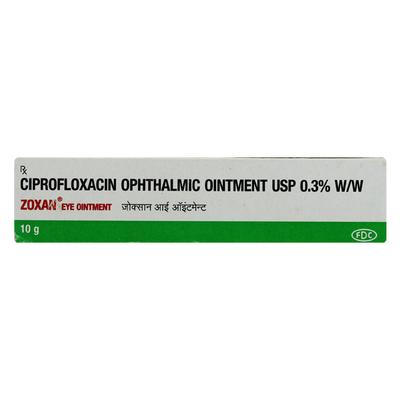


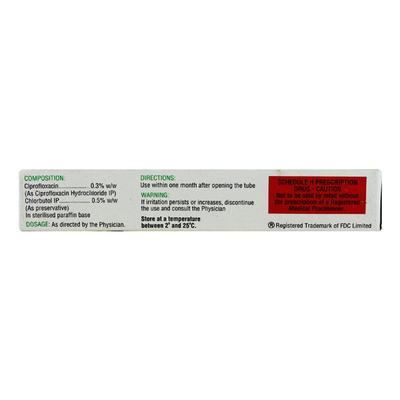
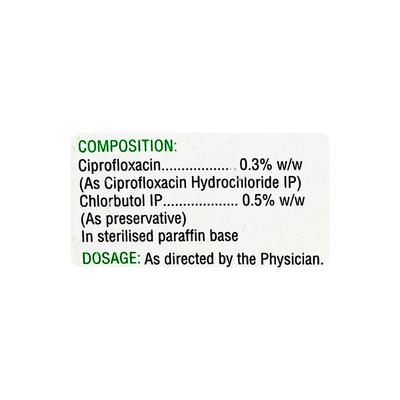

ZOXAN Eye Ointment 10gm

Netmeds First Membership
Quick Links
Introduction About ZOXAN EYE OINTMENT
ZOXAN EYE OINTMENT contains ciprofloxacin, which belongs to the group of medicines called fluoroquinolone antibiotics. It is used to manage eye inflammatory conditions such as corneal ulcers, bacterial conjunctivitis, hypopyon ulcer (inflammation of the anterior uvea and iris), and superficial deeper eye infections as well as in pre- and post-operative care.
A corneal ulcer is an open sore of the cornea of which severe cases can lead to vision loss and blindness. Symptoms include red, watery eyes and bloodshot eyes, severe eye pain and pus, and eye discharge.
ZOXAN EYE OINTMENT may delay corneal healing and could cause blurring of vision. Avoid wearing contact lenses while using ZOXAN EYE OINTMENT. It is not recommended for use in children below 2 years of age. ZOXAN EYE OINTMENT is preferably not advised for use by pregnant women and breastfeeding mothers.
The most common side effects of using ZOXAN EYE OINTMENT are redness, itching, irritation, and white discharge from the eyes. Consult a doctor immediately if any of the symptoms get worse or persist.
Uses Of ZOXAN EYE OINTMENT
- Manage eye inflammatory conditions such as corneal ulcers, bacterial conjunctivitis, hypopyon ulcer (inflammation of the anterior uvea and iris), and superficial deeper eye infections as well as in pre- and post-operative care
How ZOXAN EYE OINTMENT Works
ZOXAN EYE OINTMENT is an antibacterial agent that acts by inhibiting bacterial replication by targeting the essential enzyme (DNA gyrase) inside the bacteria. As a result, it manages and manages bacterial infections of the eye.
How to use ZOXAN EYE OINTMENT
Apply ZOXAN EYE OINTMENT as directed by your physician. It is for ophthalmic use only. Your doctor will prescribe the correct dose and duration of management for you depending on your age and disease condition.
Side Effects Of ZOXAN EYE OINTMENT
Common
- white deposit on the eye surface (cornea)
- ocular discomfort (stinging, burning, gritty feeling in the eye)
- irritation
- redness of the eye
- bad taste
Uncommon
- damage to the eye surface (cornea)
- sensitivity to light
- blurred vision
- swelling of the eye and eyelids
- pain
- dry eye
- headache
- nausea
Rare
- damage to the eye
- inflammation
- double vision
- decreased eye sensation
- tired eyes
- stye (infection of the eyelashes)
- hypersensitivity
- dizziness
- ear pain
- inflammation inside the nose
- nasal sinus discharge
- diarrhoea
- abdominal pain
- skin inflammation
- tendon disorder
Stop using ZOXAN EYE OINTMENT and consult your doctor immediately if you experience any of the following side effects
- sudden feeling of pain
- swelling or inflammation
- serious reactions with symptoms such as cardiovascular collapse, loss of consciousness, tingling sensation, pharyngeal or facial oedema, dyspnoea, urticaria, and itching
How To Manage Side Effects
Nausea or vomiting:
Take this medicine with or just after a meal or a snack. Stick to simple meals. Avoid eating rich or spicy food.
Diarrhoea:
Drink lots of fluids, such as water or fruit juices to keep yourself hydrated. Avoid taking any medicine on your own for managing diarrhoea. Consult your doctor if the symptom did not improve.
Skin rash or inflammation:
Avoid hot showers because hot water can irritate your skin further. Do not scratch the affected area. Use protective clothing when going outdoors. Regularly moisturize your skin. Consult your doctor if the symptom did not improve.
Warning & Precautions

Pregnancy
ZOXAN EYE OINTMENT must be used with caution by pregnant women. Consult your doctor before using the medicine.

Breastfeeding
ZOXAN EYE OINTMENT must be used with caution by breastfeeding mothers. Consult your doctor before using the medicine.

Driving and Using Machines
Do not drive or use machinery while using ZOXAN EYE OINTMENT as the medicine could temporarily blur or affect your vision.

Allergy
Do not take ZOXAN EYE OINTMENT if you are allergic ciprofloxacin or other quinolone antibiotics.
Others
Use in paediatrics:
ZOXAN EYE OINTMENT is not recommended in children below 1 year of age (12 months). Consult your doctor before using ZOXAN EYE OINTMENT.
Interactions
A. Drug-Drug interactions:
Before using ZOXAN EYE OINTMENT, inform your doctor if you are taking any of the following medicine:
- medicines used to manage pain and inflammation, asthma or skin problems such as corticosteroids (Ex. cortisone, prednisone, methylprednisolone, dexamethasone, betamethasone, hydrocortisone)
Overdosage:
If you or anyone else accidentally apply too much of ZOXAN EYE OINTMENT into the eyes, immediately rinse your eyes with lukewarm water. Consult a doctor immediately or visit the nearby hospital.
Synopsis
| Drug | : |
Ciprofloxacin |
| Pharmacological Category | : |
Quinolone antibiotics |
| Therapeutic Indication | : |
Corneal ulcer, bacterial conjunctivitis and other bacterial eye infections |
| Dosage Forms | : |
Injections, infusions, tablets, drops, dry syrup, eye ointment, eye drops, ointment, ear drops |
More Information
- Keep out of reach from children
- Store in a cool place
FAQs About ZOXAN EYE OINTMENT
Q: What is the use of ZOXAN EYE OINTMENT?
A: ZOXAN EYE OINTMENT is a prescription medicine used to manage infection in the eyes/ears.
Q: Can I use ZOXAN EYE OINTMENT while wearing contact lenses?Q: Can I use ZOXAN EYE OINTMENT while wearing contact lenses?
A: If you wear soft contact lenses, remove the lens before applying ZOXAN EYE OINTMENT and wait for at least 15 minutes before reinsertion.
Q: What are the side effects of ZOXAN EYE OINTMENT?
A: The most common side effects that occur due to ZOXAN EYE OINTMENT are white deposits on the cornea, ocular discomfort that includes stinging in the eyes, burning sensation, gritty feeling in the eye, irritation and redness of the eyes, as well as altered taste.
Q: Can I stop using ZOXAN EYE OINTMENT once I feel better?
A: ZOXAN EYE OINTMENT is an antibiotic, if you fail to complete a course of antibiotics, some of the bacteria causing the infection may survive and could result in resistance to that strain of bacteria. This could lead to the worsening of the symptoms. Hence, you should complete the full course of ZOXAN EYE OINTMENT as prescribed by your doctor.
Q: What will happen if I accidentally take overdosage of ZOXAN EYE OINTMENT?
A: If you or anyone else accidentally used too many drops of ZOXAN EYE OINTMENT into your eyes, immediately rinse your eyes with warm water. Consult a doctor immediately or visit the nearby hospital.
Q: How does ZOXAN EYE OINTMENT work?
A: ZOXAN EYE OINTMENT is an antibacterial agent that acts by inhibiting bacterial replication by targeting the essential enzyme (DNA gyrase) inside the bacteria. As a result, it manages and manages bacterial infections involving the eye and the ear.
Q: What is ZOXAN EYE OINTMENT used for?
A: It is used to manage eye conditions such as corneal ulcers and superficial infections of the eye caused by bacteria, in particular Pseudomonas aeruginosa and other gram-negative bacteria which are resistant to usual management. ZOXAN EYE OINTMENT is also used for the topical management of inflammatory ear infections such as chronic suppurative otitis media, external otitis, malignant otitis externa and perioperatively in chronic otitis media.
Q: Can I use ZOXAN EYE OINTMENT without consulting my doctor?
A: No. ZOXAN EYE OINTMENT is a prescription medicine which should be used only if prescribed by the physician.
Q: What if I miss a dose of ZOXAN EYE OINTMENT?
A: If you missed a dose of ZOXAN EYE OINTMENT, apply it as soon as you remember. However, if it is time for next dose, skip the missed dose and use the regular dose. Do not use a double dose of ZOXAN EYE OINTMENT to compensate the missed dose.
References
1. KD Tripathi. Fluoroquinolones antibiotics. Essentials of Medical Pharmacology. 7th Edition, 2013. Page - 709.
2. Redgrave, Liam S., Sam B. Sutton, Mark A. Webber, and Laura JV Piddock. Fluoroquinolone resistance: mechanisms, impact on bacteria, and role in evolutionary success. Trends in microbiology. 2014. [Accessed on 7th July 2022] https://www.cell.com/trends/microbiology/pdf/S0966-842X(14)00089-4.pdf
3. Aldred KJ, Kerns RJ, Osheroff N. Mechanism of quinolone action and resistance. NIH National Library of Medicine, National center for biotechnology information. Pubmed.gov. 2014. [Accessed on 7th July 2022] https://www.ncbi.nlm.nih.gov/pmc/articles/PMC3985860/
4. Novartis Pharmaceuticals UK. Electronic Medicines Compendium (EMC). [Revised in December 2019] [Accessed on 7h July 2022] https://www.medicines.org.uk/emc/files/pil.836.pdf
5. Centaur pharmaceuticals pvt. Ltd. [Revised in January 2021] [Accessed on 7h July 2022] https://www.centaurpharma.com/downloads/2021/ophthalmology/anti-infectives/Ciprocent.pdf
6. Ciplamed. Ciprofloxacin. [Revised in November 2019] [Accessed on 7th July 2022] https://ciplamed.com/content/ciplox-eye-ointment
7. Novartis Pharma AG. [Revised in May 2022] [Accessed on 7th July 2022] https://www.guildlink.com.au/gc/ws/nv/cmi.cfm?product=nvccixey10717
8. Alcon Laboratories Inc. U.S. Food & Drug Administration. [Accessed on 7th July 2022] https://www.accessdata.fda.gov/drugsatfda_docs/label/2017/020369s022lbl.pdf
Author Details