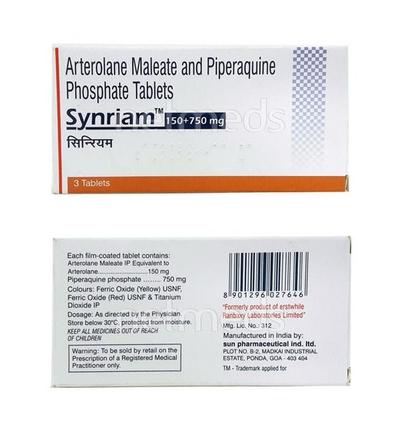


Synriam Tablet 3'S

Netmeds First Membership
Quick Links
Introduction About SYNRIAM TABLET
SYNRIAM TABLET is a combination of Arterolane and Piperaquine which belongs to the group of medicines called Antimalarial agents. It is used to manage acute uncomplicated malaria infection due to Plasmodium falciparum in adults.
Malaria is a disease caused by a parasite which is spread to humans through the bites of infected mosquitoes. Symptoms include fever, chills, headache, nausea, cough, vomiting, diarrhea, abdominal pain, muscle or joint pain, fatigue, rapid breathing, and heart rate.
Prior to management with SYNRIAM TABLET your doctor might want you to take some blood test to understand your existing condition.
Before taking SYNRIAM TABLET, tell your doctor if you have any liver, kidney disease. Consult your doctor for advice.
SYNRIAM TABLET should be used with caution in children. There is no proper information on the use of SYNRIAM TABLET during pregnancy and breastfeeding, and therefore consult your doctor before taking.
The most common side effects of taking SYNRIAM TABLET are nausea, vomiting, abdominal pain, loss of appetite, indigestion, cough, dizziness and headache. Consult your doctor if any of the above side effects worsen or persist for a longer duration.
Uses Of SYNRIAM TABLET
- Management of acute uncomplicated malaria infection due to Plasmodium falciparum
How SYNRIAM TABLET Works
SYNRIAM TABLET is a combination of two antiparasitic medicines. Arterolane and Piperaquine which manages malaria. They work by increasing the levels of heme in the blood, a substance toxic to the malarial parasite. This works against the parasite and stops the infection from spreading.
How to use SYNRIAM TABLET
Take SYNRIAM TABLET as advised by your physician. Swallow the medicine with water. Do not crush or chew the medicine. Your doctor will decide the correct dose and duration for you depending upon your age, body weight and disease condition.
Side Effects Of SYNRIAM TABLET
Common
- nausea
- vomiting
- abdominal pain
- loss of appetite
- indigestion
- cough
- dizziness
- headache
How To Manage Side Effects
Nausea and Vomiting:
Take the medicine, with or just after a meal. Stick to simple meals. Avoid eating oily or spicy food. Consult your doctor for advice.
Stomach pain:
Try to rest and relax. Eat and drink slowly or try to have smaller and frequent meals. Keep a heat pad. Consult your doctor for advice.
Headache:
Rest and relax. Drink plenty of fluids such as water and electrolytes. Apply a pain-relieving balm on the head if necessary. Do not consume alcohol. Contact your doctor if the symptom did not improve.
Warning & Precautions

Pregnancy
There is limited information about the use of SYNRIAM TABLET during pregnancy. Consult your doctor before taking it.

Breastfeeding
There is limited information about the use of SYNRIAM TABLET during breastfeeding. Consult your doctor before taking it.

Kidney
SYNRIAM TABLET should be used with caution in patients with moderate to severe kidney disease. If needed dosage will be adjusted accordingly. Consult your doctor before taking.

Liver
SYNRIAM TABLET should be used with caution in patients with moderate to severe liver disease. If needed dosage will be adjusted accordingly. Consult your doctor before taking.

Allergy
Do not take SYNRIAM TABLET if you are allergic to Arterolane, Piperaquine or any other ingredients of this medicine.

Heart Disease
SYNRIAM TABLET should be used with caution in patients with prolonged QT interval (either congenital disorders or acquired clinical condition like symptomatic cardiac arrhythmias). Consult your doctor before taking.
Others
Before taking SYNRIAM TABLET inform your doctor if you have:
- electrolyte disturbances (hypokalemia, hypomagnesaemia)
Use in pediatrics:
Your doctor will give the right dose depends on your child’s age, body weight and disease condition.
Use in geriatrics:
SYNRIAM TABLET should be use with caution in elderly patients above 65 years of age as the safety and effectiveness have not been established yet.
Interactions
A. Drug-Drug interactions:
Before taking SYNRIAM TABLET inform your doctor if you are taking any of the following medicine:
- quinidine, procainamide, disopyramide and amiodarone, sotalol (used to manage heart disorders)
- antipsychotics (pimozide, ziprasidone)
- antidepressants (fluoxetine, citalopram)
- certain antibiotics (macrolides, fluoroquinolones, imidazole and triazole antifungal agents)
- antihistamines (terfenadine, astemizole), or cisapride
- anti-retroviral drugs (abacavir, lamivudine)
- quinine, quinidine and halofantrine (antimalarials)
Overdosage:
If you or anyone else accidentally takes too much of SYNRIAM TABLET, consult your doctor immediately or visit the nearby hospital.
Synopsis
| Drug | : | Arterolane, Piperaquine |
| Pharmacological Category | : | Antimalarial agents |
| Therapeutic Indication | : | Malaria |
| Dosage Forms | : | Tablet |
More Information
- Keep SYNRIAM TABLET out of reach of children
- Store below 30°C
FAQs About SYNRIAM TABLET
What is SYNRIAM TABLET used for?
It is used to manage acute uncomplicated malaria infection due to Plasmodium falciparum in adults. Malaria is a disease caused by a parasite which is spread to humans through the bites of infected mosquitoes. Symptoms include fever, chills, headache, nausea, cough, vomiting, diarrhea, abdominal pain, muscle or joint pain, fatigue, rapid breathing, and heart rate.
Can SYNRIAM TABLET be used in patients with kidney diseases?
SYNRIAM TABLET should be used with caution in patients with moderate to severe kidney disease, consult your doctor before taking.
Can SYNRIAM TABLET in pregnant women?
There is limited information about the use of SYNRIAM TABLET during pregnancy, so consult your doctor before taking it.
Can SYNRIAM TABLET in patients with liver diseases?
SYNRIAM TABLET should be used with caution in patients with moderate to severe kidney disease, consult your doctor before taking.
Can SYNRIAM TABLET be used in children?
Your doctor will give the right dose depends on your child’s age, body weight and disease condition.
References
1. KD Tripathi. Antimalarial Drugs. Essentials of medical pharmacology. Eighth Edition. 2019. Page –890-892.
2. CY Patil, SS Katare, MS Baig, and SM Doifode. Fixed Dose Combination of Arterolane and Piperaquine: A Newer Prospect in Antimalarial Therapy. [Accessed on 6th June 2022] https://www.ncbi.nlm.nih.gov/pmc/articles/PMC4160665/
3. Neena Valecha, Sornchai Looareesuwan, Andreas Martensson. Arterolane, a New Synthetic Trioxolane for Treatment of Uncomplicated Plasmodium falciparum Malaria: A Phase II, Multicenter, Randomized, Dose-Finding Clinical Trial. [Accesses on 6th June 2022] https://academic.oup.com/cid/article/51/6/684/460092?login=false
4. Arterolane. Pubchem. [Revised in June 2022] [Accessed on 6th June 2022] https://pubchem.ncbi.nlm.nih.gov/compound/Arterolane
5. Arterolane + Piperaquine. Mayoclinic. [Revised in October 2021] [Accessed on 6th June 2022] https://www.mayoclinic.org/diseases-conditions/malaria/diagnosis-treatment/drc-20351190
Useful Diagnostic Tests
- Blood test
Author Details