





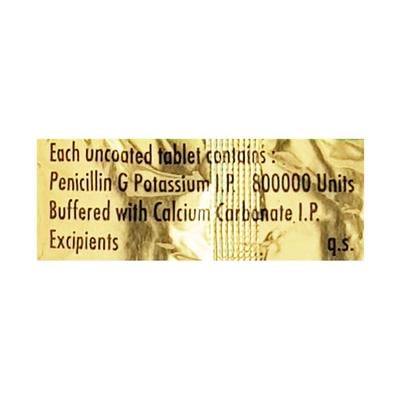

Pentids 800 Tablet 10'S

Netmeds First Membership
Quick Links
Introduction About PENTIDS 800 TABLET
PENTIDS 800 TABLET contains Penicillin G which belongs to the group of medicines called Penicillin antibiotics. It is used in the management of bacterial infections in different parts of the body and to manage infections before, during and after surgery.
Before taking PENTIDS 800 TABLET, inform your doctor if you have kidney or liver problems, allergies, asthma, pregnancy and breast feeding. PENTIDS 800 TABLET works by the bacteria that are causing the infections. Thus, it helps to manage infections effectively. PENTIDS 800 TABLET can be given to children as prescribed by the doctor. PENTIDS 800 TABLET should be used with caution in elderly patients above 65 years of age. Consult your doctor before taking the medicine.
Take PENTIDS 800 TABLET exactly as advised by your doctor. Swallow the medicine with a glass of water, and do not crush or chew the tablet. Do not exceed the recommended daily dosage. The common side effects of PENTIDS 800 TABLET includes oral thrush, white, furry, sore, tongue, mouth, vaginal thrush, sore, itchy, vaginal discharge and mild rash. Consult with your doctor if any of these worsens or does not improve.
Uses Of PENTIDS 800 TABLET
- Used in the management of bacterial infections in different parts of the body and to manage infections before, during, and after surgery
How PENTIDS 800 TABLET Works
PENTIDS 800 TABLET works against the bacteria that are causing the infections. Thus, it helps to manage infections effectively.
How to use PENTIDS 800 TABLET
Always take PENTIDS 800 TABLET exactly as advised by your doctor. Swallow the medicine with a glass of water, and do not crush or chew the tablet. Do not exceed the recommended daily dosage.
Side Effects Of PENTIDS 800 TABLET
Common
- oral thrush-white, furry, sore, tongue and mouth
- vaginal thrush
- sore and itchy
- vaginal discharge
- mild rash
Stop taking PENTIDS 800 TABLET and contact your doctor immediately if you experience any of the following side effects:
- serious allergic reactions such as severe rash, wheezing, palpitations, dizziness, swollen glands, joint pain, fever
- severe abdominal cramps or stomach cramps
- watery and severe diarrhoea
How To Manage Side Effects

Diarrhea
Drink lots of fluids, such as water or fruit juices to keep you hydrated. Do not take any medicine on your own for managing diarrhea. Contact your doctor if the symptom did not improve.

Stomach Pain
Rest and relax. Eat and drink slowly or try to have smaller meals. Keep a heat pad on your stomach. Do not self-manage and contact your doctor if the symptom did not improve.
Warning & Precautions

Pregnancy
Consult your doctorInform your doctor if you are pregnant or planning for pregnancy before taking PENTIDS 800 TABLET. Your doctor will discuss the risks and benefits of using PENTIDS 800 TABLET during pregnancy.

Breastfeeding
Consult your doctorInform your doctor if you are breastfeeding, before using PENTIDS 800 TABLET. Your doctor will discuss the risks and benefits of using PENTIDS 800 TABLET during breastfeeding.

Driving and Using Machines
Use with CautionPENTIDS 800 TABLET is generally does not cause any problems with your ability to drive a car or operate machinery.

Kidney
Use with CautionPENTIDS 800 TABLET should be used with caution in patients with kidney problems. Consult your doctor before taking the medicine.

Liver
Use with CautionPENTIDS 800 TABLET should be used with caution in patients with liver problems. Consult your doctor before taking the medicine.

Allergy
ContraindicatedDo not take PENTIDS 800 TABLET if you are allergic to Penicillin G or other penicillin’s or have had an allergic reaction to cephalosporins or any other ingredients of this medicine.

Lungs
Use with CautionPENTIDS 800 TABLET should be used with caution in patients with asthma problems. Consult your doctor before taking the medicine.

Use In Pediatrics
Consult your doctorPENTIDS 800 TABLET can be given to children as prescribed by a doctor. Consult your doctor for advice.

Use In Geriatrics
Use with CautionPENTIDS 800 TABLET should be used with caution in elderly patients (aged above 65 years). Consult your doctor before taking the medicine.
Others
PENTIDS 800 TABLET is not recommended for use if you:
- have allergic reaction symptoms such as skin rash, itching and difficult breathing
Interactions
A. Drug-Drug interactions:
Before taking PENTIDS 800 TABLET, inform your doctor if you are taking any of the following medicine:
- Antigout drugs (Ex. Probenecid)
- Antibiotics (Ex. tetracyclines, erythromycin, chloramphenicol)
Overdosage:
If you or anyone else accidentally takes too much of PENTIDS 800 TABLET, consult your doctor immediately or visit the nearby hospital.
Synopsis
| Drug | : | Penicillin G |
| Pharmacological Category | : | Antibiotics |
| Therapeutic Indication | : | Bacterial infections |
| Dosage Forms | : | Tablet |
More Information
Storage
- Keep PENTIDS 800 TABLET out of the sight and reach of children
- Store PENTIDS 800 TABLET below 25°C
FAQs About PENTIDS 800 TABLET
Q: What is PENTIDS 800 TABLET used for?
A: PENTIDS 800 TABLET contains Penicillin G, which belongs to the group of medicines called penicillin antibiotics. It is used in the management of bacterial infections in different parts of the body and to manage infections before, during, and after surgery. Consult your doctor before using the medicine.
Q: How does PENTIDS 800 TABLET work?
A: PENTIDS 800 TABLET works against the bacteria that are causing the infections. Thus, it helps to manage infections effectively.
Q: Can I take PENTIDS 800 TABLET to manage colds or flu?
A: No, do not take any antibiotic, including PENTIDS 800 TABLET to manage colds and flu, as it will not work against infections caused by viruses, such as colds or the flu.
Q: Can I stop using PENTIDS 800 TABLET if I am feeling better?
A: No, do not stop using PENTIDS 800 TABLET suddenly without completing the course of the therapy, as it may lead to a recurrence of symptoms and resistance to antibiotics.
Q: How do I use PENTIDS 800 TABLET?
A: Always take PENTIDS 800 TABLET exactly as advised by your doctor. Swallow the tablet with a glass of water, and do not crush or chew the tablet. Do not exceed the recommended dosages.
Q: What are the common side effects of PENTIDS 800 TABLET?
A: The common side effects of PENTIDS 800 TABLET include allergic reactions (ranging from mild rash to severe anaphylaxis), gastrointestinal disturbances (such as nausea, vomiting, and diarrhea), and local reactions at the injection site (pain, redness, and swelling). It can also disrupt normal gut flora, leading to secondary infections like candidiasis (yeast infection).
Q: Who should not take PENTIDS 800 TABLET?
A: PENTIDS 800 TABLET is not recommended for use if you are allergic to Penicillin G or other penicillin’s or have had an allergic reaction to cephalosporins. Consult your doctor before taking the medicine.
Q: What precautions must be taken while using PENTIDS 800 TABLET?
A: Before taking PENTIDS 800 TABLET inform your doctor if you have allergies, asthma, liver, or kidney disease.
Q: Can PENTIDS 800 TABLET be used during pregnancy?
A: Inform your doctor if you are pregnant or planning for pregnancy before using PENTIDS 800 TABLET. Your doctor will discuss the risks and benefits of using PENTIDS 800 TABLET during pregnancy.
Q: Does PENTIDS 800 TABLET cause allergic reactions?
A: Yes, PENTIDS 800 TABLET may cause allergic reactions such as a severe rash, wheezing, palpitation, and feeling faint. Consult your doctor immediately.
Q: Is there a risk of antibiotic resistance with PENTIDS 800 TABLET?
A: Yes, antibiotic resistance is a concern with PENTIDS 800 TABLET, as with all antibiotics. Overuse and misuse of antibiotics can contribute to the development of resistant bacterial strains. Patients should complete the full course of treatment as prescribed, even if symptoms improve before the medication is finished. Therefore, PENTIDS 800 TABLET should only be used when indicated and as prescribed by a healthcare professional.
References
1. Petri, W. A. Jr. (2011). Penicillins, Cephalosporins, and Other β-Lactam Antibiotics. In L. L. Brunton, B. Chabner, & B. C. Knollmann (Eds.), Goodman & Gilman’s: The Pharmacological Basis of Therapeutics (12th ed., pp. 1482–1486). McGraw-Hill.
2. Chambers, H. F., & Deck, D. H. (2009). Beta-Lactam and Other Cell Wall- & Membrane-Active Antibiotics. In B. G. Katzung, S. B. Masters, & A. J. Trevor (Eds.), Basic and Clinical Pharmacology (11th ed., p. 774). essay, McGraw Hill Education.
3. William A. Gartlan; Sajedur Rahman; Mark V. Pellegrini; Kaitlyn Reti. Benzathine Penicillin. NIH. National Library of Medicine. National Center for Biotechnology Information. PubMed Central. 12 Feb 2024. [Accessed on 30th August 2024] https://www.ncbi.nlm.nih.gov/books/NBK507723/
4. Sandoz New Zealand Limited. Penicillin G tablet. [Revised in March 2023] [Accessed on 30th August 2024] https://www.medsafe.govt.nz/Consumers/cmi/p/penicilling.pdf
Useful Diagnostic Tests
- Complete blood count
- Liver function test
- Kidney function test
- Bacterial Culture sensitivity test
Author Details

