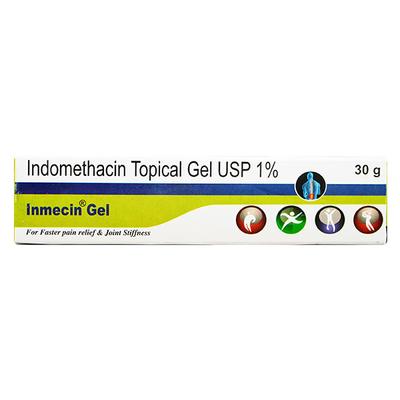


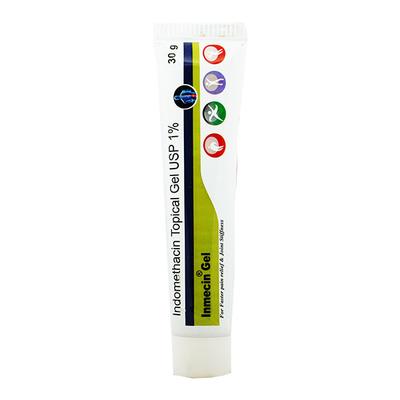
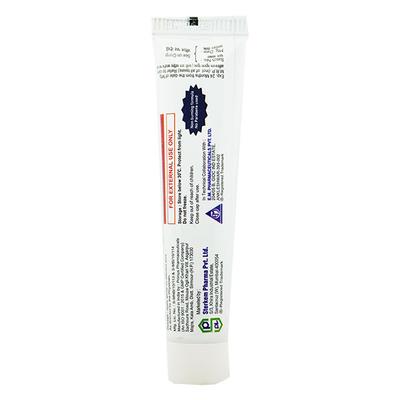

INMECIN 1% Gel 30gm

Netmeds First Membership
Quick Links
Introduction About INMECIN 1% GEL
INMECIN 1% GEL contains Indomethacin which belongs to the group of medicines called Nonsteroidal Anti-inflammatory drugs. It is indicated to provide relief from pain and inflammation in conditions like myalgia (muscle pain), trauma, arthritis deformans (tenderness or swelling of one or more joints characterized by pain, stiffness, and reduced movements), and periarthritis.
It also relieves ilumeroscapularis (pain and stiffness of shoulder joint), tenosynovitis (inflammation of the tissue connecting muscles and bone characterised by pain and tenderness), peritendinitis, humeral epicondylitis or tennis elbow (pain due to irritation of connecting tissue from forearm to elbow).
INMECIN 1% GEL should be used with caution in patients having open wounds. INMECIN 1% GEL should be used with caution during pregnancy and in breastfeeding women. Caution should be exercised while applying INMECIN 1% GEL in children below 14 years of age. The most common side effects of applying INMECIN 1% GEL are pruritus or itching, burning sensation, pain, and rash at the application site. Consult your doctor if the symptom worsens or does not improve.
Uses Of INMECIN 1% GEL
It is used to provide pain relief in following conditions like:
- myalgia or muscle pain
- pain and swelling due to trauma
- arthritis deformans, periarthritis
- pain and stiffness of shoulder joint
- tenosynovitis(inflammation of the tissue connecting muscles and bone characterised by pain and tenderness)
- peritendonitis, tennis elbow (pain due to irritation of connecting tissue from forearm to elbow)
How INMECIN 1% GEL Works
INMECIN 1% GEL works by managing the function of enzyme cyclooxygenase-1 and 2 which leads to the stopping of prostaglandins synthesis (chemical substances responsible for pain & inflammation) that results in reduced inflammatory reactions and relief from pain.
How to use INMECIN 1% GEL
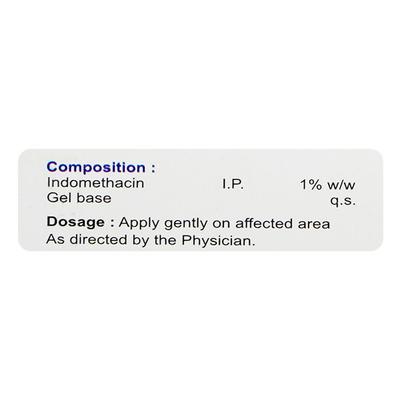
Always apply INMECIN 1% GEL as directed by your physician. It is for external use only. Wash your hands before and after use. Apply the medicine gently into the affected area. Your doctor will decide the right dose and duration for you depending on your age, weight and disease condition.
Side Effects Of INMECIN 1% GEL
Common
- pruritus or itching at the site of application
- burning sensation, pain, and rash
How To Manage Side Effects
Skin rash:
Try to avoid hot showers because it may cause skin irritation. Avoid frequent contact and rubbing over the affected area. Use sunscreen and protective clothing when outdoors. If this symptom does not get better, speak to a doctor.
Warning & Precautions

Pregnancy
INMECIN 1% GEL should be used with caution if you are pregnant or planning to have a baby. Consult your doctor before using.

Breastfeeding
INMECIN 1% GEL should be used with caution in breastfeeding women. Consult your doctor before using.

Allergy
INMECIN 1% GEL is not recommended for use if you are allergic to Indomethacin or any other ingredients of this medicine.
Others
Before using INMECIN 1% GEL, inform your doctor if you:
- have an open wound
Use in pediatrics:
INMECIN 1% GEL should be used with caution in children below 14 years of age. Consult your doctor before using INMECIN 1% GEL.
Interactions
A. Drug - Drug interactions:
Before applying INMECIN 1% GEL, inform your doctor if you are taking any other medicines including non-prescription and herbal medicines.
Overdosage:
If you or anyone accidentally used too much of INMECIN 1% GEL, consult your doctor immediately or visit the nearby hospital.
Synopsis
| Drug | : | Indomethacin |
| Pharmacological Category | : | Non-Steroidal Anti-Inflammatory Drugs (Non- Selective COX-1 Inhibitor) |
| Therapeutic Indication | : | Pain relief |
| Dosage Forms | : | Tablet, Capsule, Injection, Gel, Suppository |
More Information
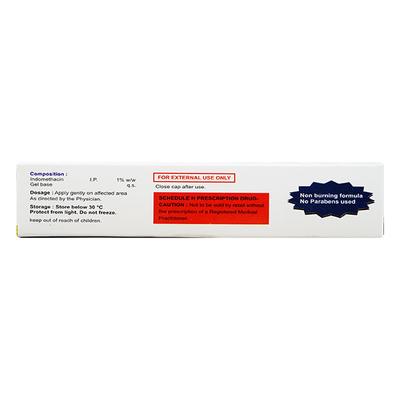
- Keep INMECIN 1% GEL out of reach of children
- Store at a temperature below 30°C
FAQs About INMECIN 1% GEL
Can INMECIN 1% GEL be used as a painkiller?
Yes, this medicine is used to provide pain relief in conditions like myalgia or muscle pain, pain and swelling due to trauma, arthritis deformans, periarthritis, ilumeroscapularis, tenosynovitis, peritendonitis, humeral epicondylitis, and tennis elbow.
How does INMECIN 1% GEL work?
INMECIN 1% GEL works by managing the function of enzyme cyclooxygenase-1 and 2 which leads to the stopping of prostaglandins synthesis (chemical substances responsible for pain & inflammation) that results in reduced inflammatory reactions and relief from pain.
Is INMECIN 1% GEL safe in pregnant and breast-feeding women?
INMECIN 1% GEL should be used with caution in pregnancy, women planning to have a baby and in breastfeeding women. Consult your doctor before using it.
Can INMECIN 1% GEL be used in children?
INMECIN 1% GEL should be used with caution in children below 14 years of age. Consult your doctor before using INMECIN 1% GEL for more information on the usage.
What are the side effects of using INMECIN 1% GEL?
The most common side effects of using INMECIN 1% GEL are pruritus or itching, burning sensation, pain, and rash at the application site. If this symptom does not get better, speak to your doctor.
References
1. KD. Tripathi. Nonsteroidal Anti-inflammatory Drugs. Essentials of medical pharmacology. Eighth edition. 2019. Page –192-193.
2. Joseph T Dipiro. Rheumatological disease. Pharmacotherapy: A Pathophysiologic Approach. Eighth edition. 2019. Page – 1613.
3. Indomethacin. Drugs and Lactation Database. National Library of Medicine, National center for biotechnology information. Bookshelf. January 2021. [Accessed 29th November 2022] https://www.ncbi.nlm.nih.gov/books/NBK500989/#:~:text=Because%20of%20the%20low%20levels,a%20newborn%20or%20preterm%20infant.
4. Indomethacin. NIH National Library of Medicine, National Centre for biotechnology information. PubChem. November 2022. [Accessed 29th November 2022] https://pubchem.ncbi.nlm.nih.gov/compound/Indomethacin
5. Diamond Lab. Indomethacin. MIMS. [Accessed 29th November 2022] https://www.mims.com/philippines/drug/info/vi-gel#
Useful Diagnostic Tests
- X-ray
- MRI
- CT scan
Author Details