


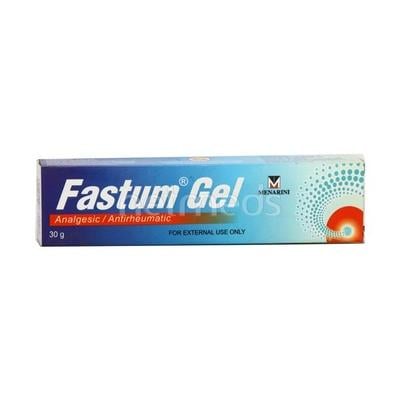


Fastum Gel 30gm

Netmeds First Membership
Quick Links
Introduction About FASTUM GEL
FASTUM GEL contains Ketoprofen which belongs to the group of medicines called Nonsteroidal Anti-inflammatory drugs. It is indicated to provide pain relief in conditions like soft tissue injuries including sports injuries, sprains and strains.
FASTUM GEL is also used to manage musculo-tendonitis (inflammation of the tissue connecting muscles and bone), swelling, backache and conditions affecting the joints and connective tissues (Ex. arthritis).
Your doctor might advise you to protect your skin from sunlight (even on a bright cloudy day) and to not use sun beds during management with FASTUM GEL and after management for two weeks.
Before using FASTUM GEL inform your doctor if you have asthma, liver, kidney and heart problems, history of any reactions to light, any skin conditions like eczema or acne, open wounds or infections.
FASTUM GEL is not recommended for use in pregnant (especially in the last 3 months) and breast-feeding women so, consult your doctor for advice. FASTUM GEL is not suitable for use in children (below 12 years of age).
Consult your doctor if any of the symptoms deteriorate or if you experience any side effects while using FASTUM GEL.
Uses Of FASTUM GEL
It is used to provide pain relief in conditions like:
- soft tissue injuries like sports injuries, sprains and strains
- musculo-tendonitis
- swelling
- backache
- conditions affecting the joints and connective tissues (Ex. arthritis)
How FASTUM GEL Works
FASTUM GEL relieves pain and inflammation by inhibition of cylooxygenase-2 (COX-2), thus decreasing the levels of prostaglandins (substances that mediate pain, fever and inflammation).
How to use FASTUM GEL
Always use FASTUM GEL as directed by your physician. Wash your hands before and after use. Massage the gel gently into the affected area. It is for topical use only. Do not apply FASTUM GEL to sore, broken or infected skin, near the eyes, mouth, nostrils, anal and genital regions. Do not cover the applied area with a dressing or plaster. Your doctor will decide the correct dose and duration for you depending upon your age, body weight and disease condition.
Protect managed areas by wearing clothing during management and for two weeks after discontinuing management, to avoid any risk of photosensitisation. Avoid direct sunlight and sunbeds during and for 2 weeks after management.
Side Effects Of FASTUM GEL
Uncommon
- skin reactions such as eczema (skin inflammation), redness, itchiness or burning sensation
Rare
- photosensitivity (skin reaction to light or sunlamps)
- rashes, blisters, red lumps on skin
Stop taking FASTUM GEL and contact your doctor immediately if you experience any of the following side effects:
- signs of allergic reaction (rash, swallowing or breathing problems, wheezing, swelling of lips, face, throat or tongue)
- severe skin reactions when exposed to sunlight such as blistering or eczema of the eyes
- flu-like symptoms such as fever, chills or aching muscles
- a serious allergic reaction called anaphylactic shock (skin rash, swelling of the face, wheezing or trouble breathing)
- stomach ulcer (which may be bleeding), diarrhea
- kidney problems (worsening of a pre-existing kidney dysfunction)
How To Manage Side Effects
Skin rash:
Avoid hot showers because hot water can further irritate your skin. Do not scratch the affected area. Use protective clothing when going outdoors. Regularly moisturize your skin. Consult your doctor if your skin rash persists.
Diarrhea:
Drink lots of liquids like water or fruit juice to maintain hydration. Call your doctor before taking any medicine for diarrhea. If diarrhea persists, contact your doctor.
Warning & Precautions

Pregnancy
FASTUM GEL is not recommended for use in pregnant women especially during the last three months. Consult your doctor before using it.

Breastfeeding
FASTUM GEL is not recommended for use in breast-feeding women as small amount of medicine may be passed to the baby. Consult your doctor before using it.

Driving and Using Machines
FASTUM GEL does not affect the ability to drive or operate machineries. However, consult your physician.

Kidney
FASTUM GEL should be used with caution in patients with kidney problems. Consult your doctor for advice.

Liver
FASTUM GEL should be used with caution in patients with liver problems. Consult your doctor for advice.

Allergy
FASTUM GEL is not recommended for use if you are allergic to Ketoprofen or any of the other ingredients of this medicine, aspirin or other NSAIDs (Ex. ibuprofen), tiaprofenic acid, fenofibrate, UV blockers (Ex. avobenzone, oxybenzone) or perfumes.

Lungs
FASTUM GEL should be used with caution in patients with asthma, persistent runny nose, sinusitis or nasal polyps. Consult your doctor for advice.

Heart Disease
FASTUM GEL should be used with caution in patients with heart problems. Consult your doctor for advice.
Others
FASTUM GEL is not recommended for use if you:
- are going to apply FASTUM GEL on any skin conditions like eczema (skin inflammation) or acne, open wounds or infections
- have a history of photosensitivity (reactions to sunlight)
- are going to apply FASTUM GEL on an area with an occlusive dressing
- experienced runny nose and sneezing after taking aspirin or other NSAIDs
Before taking FASTUM GEL, inform your doctor if you have:
- any infection
Use in pediatrics:
FASTUM GEL is not recommended for use in children below 12 years of age. Consult your doctor before using it.
Use in geriatrics:
Elderly patients are generally more prone to side effects of Non Steroidal Anti-Inflammatory Drugs like FASTUM GEL. Consult your doctor before using it.
Interactions
A. Drug - Drug interactions:
Before using FASTUM GEL, inform your doctor if you are taking any of the following medicines:
- aspirin or other NSAIDs like ibuprofen, diclofenac (medicine used as painkiller)
- methotrexate (medicine used in cancer management)
- medicines used for blood thinning (Ex. dabigatran, rivaroxaban)
Overdosage:
If you or anyone accidentally use too much of FASTUM GEL, consult your doctor immediately or visit the nearby hospital as it may increase the risk of side effects. Symptoms of overdose include allergic reaction, asthma, kidney disease.
Synopsis
| Drug | : | Ketoprofen |
| Pharmacological Category | : | Nonsteroidal Anti-inflammatory Drugs |
| Therapeutic Indication | : | Pain management |
| Dosage Forms | : | Plaster, Patch, Transdermal patch, Gel |
More Information
- Keep FASTUM GEL out of reach of children
- Store FASTUM GEL below 25°C
FAQs About FASTUM GEL
Is FASTUM GEL safe in breast-feeding women?
FASTUM GEL is not recommended for use in breast-feeding woman as small amount of medicine may be passed to the baby. Consult your doctor before taking FASTUM GEL.
What if FASTUM GEL goes into my eyes or mouth?
Do not use FASTUM GEL in or near your eyes or mouth. If it accidently gets into your eyes or mouth, rinse with plenty of clean water. Consult your doctor if you experience any discomfort.
Can I use other hygiene products like soaps and shampoo during management with FASTUM GEL?
Certain hygiene products such as shampoo, after-shave, shower and bath gels, skin creams, lipsticks, anti-ageing creams, make-up removers and hair sprays contain an excipient called octocrylene (to delay product breakdown due to sunlight). Co-application of such octocrylene-containing products can cause skin reactions. Consult your doctor for advice.
How can I protect myself from sunlight during FASTUM GEL management?
Do not expose the skin that has been managed with FASTUM GEL to direct sunlight or sunbeds and wear protective clothing on the managed areas during management and 2 weeks after the management. Consult your doctor for advice.
Can I use FASTUM GEL if I have any infection?
FASTUM GEL may hide signs of infections like fever and pain. It is therefore possible that it may delay appropriate management of infection, which may increase the risk of complications. This has been observed in bacterial infections like pneumonia and skin infections related to chickenpox. If you take this medicine while you have an infection and your infection symptoms persist or worsen, consult a doctor immediately.
References
1. KD. Tripathi. Nonsteroidal Anti-inflammatory Drugs. Essentials of medical pharmacology. Eighth edition. 2019. Page – 218.
2. S Coaccioli. Ketoprofen 2.5% gel: a clinical overview. National Library of Medicine, National center for biotechnology information. PubMed.gov. August 2011. [Accessed on 2nd August 2022] https://pubmed.ncbi.nlm.nih.gov/21845805/
3. Akdeniz University. Ketoprofen Gel vs Placebo in Low Back Pain. NIH U.S. National Library of Medicine. ClinicalTrials.gov. [Revised in December 2015] [Accessed 2nd August 2022] https://clinicaltrials.gov/ct2/show/NCT02491879
4. Pinewood Laboratories Ltd. Electronic Medicines Compendium (EMC). [Revised in October 2020]. [Accessed 2nd August 2022] https://www.medicines.org.uk/emc/files/pil.9276.pdf
5. A. Menarini Manufacturing. Electronic Medicines Compendium (EMC). [Revised in November 2020]. [Accessed 2nd August 2022] https://www.medicines.org.uk/emc/files/pil.1614.pdf
Author Details

