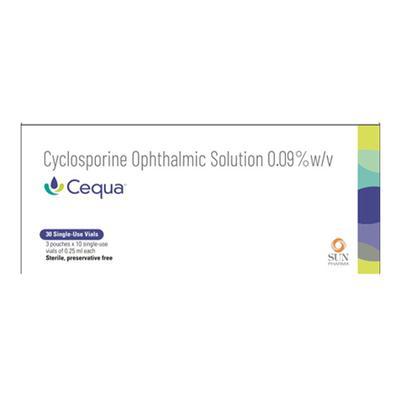


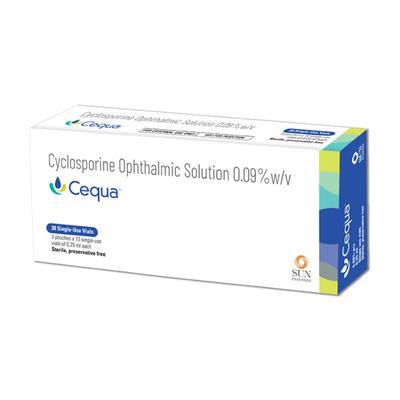
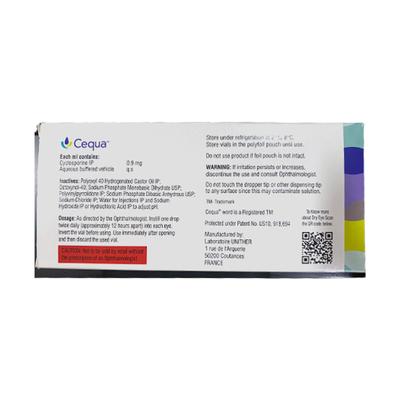
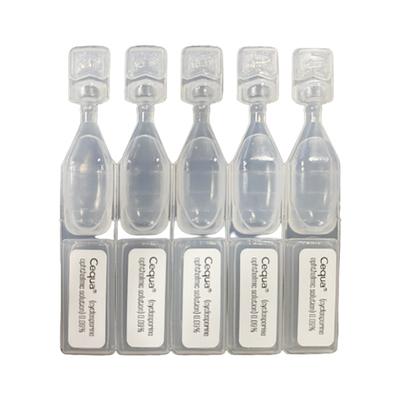

CEQUA Ophthalmic Solution 30x0.25ml

Netmeds First Membership
Quick Links
Introduction About CEQUA OPHTHALMIC SOLUTION
CEQUA OPHTHALMIC SOLUTION contains Cyclosporin which belongs to the group of medicines called calcineurin inhibitor immunosuppressants. It is indicated to lubricate eyes by increasing tear production in patients with keratoconjunctivitis sicca (dry eye syndrome).
Keratoconjunctivitis sicca is an allergic eye condition that affects the transparent layer and the thin memebrane covering the front part of the eye. It is characterized by excessive eye dryness, redness, itching, inflammation and discomfort.
CEQUA OPHTHALMIC SOLUTION is for ophthalmic use only. Wash your hands before and after application. Avoid touching the tip of the container with your mouth, nose or other parts of body to avoid contamination.
If you wear soft contact lenses, make sure to remove them before using CEQUA OPHTHALMIC SOLUTION. Consult your doctor about the usage of contact lenses while undergoing management for dry eyes.
Before using CEQUA OPHTHALMIC SOLUTION inform your doctor if you have any other eye conditions apart from dry eye syndrome such as eye infection or glaucoma. Consult your doctor before using CEQUA OPHTHALMIC SOLUTION if you are pregnant or breastfeeding.
The most common side effects of using CEQUA OPHTHALMIC SOLUTION are eye pain, redness, irritation or discomfort, watery eyes and inflammation of eyelids,. Consult your doctor if they trouble you.
Uses Of CEQUA OPHTHALMIC SOLUTION
- It is indicated to increase tear production in patients with keratoconjunctivitis sicca (dry eye syndrome).
How CEQUA OPHTHALMIC SOLUTION Works
CEQUA OPHTHALMIC SOLUTION is an immunosuppressive agent. Following application on the eyes, it blocks the release of certain chemicals in the eye (such as T-cells, interleukins and cytokines) that causes eye inflammation, allergies and discomfort. As a result, it reduces inflammation and swelling on the eye and keeps your eyes lubricated by allowing your eye to produce tears.
How to use CEQUA OPHTHALMIC SOLUTION
Use CEQUA OPHTHALMIC SOLUTION as advised by your physician. It is for ophthalmic use only. Wash your hands before application. Tilt your head slightly backwards and place the tip of the container close to your eyes.
Gently pull your lower eyelid and instil one drop of CEQUA OPHTHALMIC SOLUTION or as directed by your physician. Close your eyes and gently press the inner corner of your eye for 2 minutes. Repeat the same for the other eye if required. CEQUA OPHTHALMIC SOLUTION can be used concomitantly with artificial tears, allowing a 15-minute interval between products. Invert the vial before using and use it immediately after opening.
Do not touch the tip of the container with your eyes, eyelids or areas around your eyes or fingers, to avoid contamination. Avoid wearing contact lenses while undergoing therapy for dry eyes.
Your doctor will decide the correct dose and duration of therapy for you depending upon your age, body weight and disease condition. Do not stop using CEQUA OPHTHALMIC SOLUTION unless your doctor tells you to stop.
Side Effects Of CEQUA OPHTHALMIC SOLUTION
Common
- Eye pain, redness, irritation or discomfort
- Sensation of foreign body in the eye
- Increased watering of eyes
- Blurred vision
- Swelling and redness of eyelids
- Upper respiratory tract
- Cough, headache
- Inflammation of eyelids
- headache
How To Manage Side Effects

Eye irritation Or Itching
Avoid watching direct light sources. Do not strain your eyes too much. Protect your eyes from bright light while going outdoors using sunglasses. Consult your doctor if this side effect bothers you.

Visual Disturbances
Close your eyes and relax. Do not strain your eyes by looking at mobile phones, laptops, or television. Avoid driving or operating any heavy tools or machines while your vision is blur. Consult your doctor if you experience blurred vision for a prolonged period.
Warning & Precautions

Pregnancy
Consult your doctorThere is no proper information regarding the use of CEQUA OPHTHALMIC SOLUTION among pregnant women. Therefore consult your doctor before using it.

Breastfeeding
Use with CautionCEQUA OPHTHALMIC SOLUTION should be used with caution in breast-feeding women. Therefore, consult your doctor before using it.

Allergy
Consult your doctorDo not use CEQUA OPHTHALMIC SOLUTION if you are allergic to cyclosporin.

Use In Pediatrics
Consult your doctorThe safety of CEQUA OPHTHALMIC SOLUTION have not been established in children aged below 18 years.Therefore, consult your doctor before using it.
Others
Before using CEQUA OPHTHALMIC SOLUTION inform your doctor if you:
- had an eye infection (herpes viral infection) or suspect of having it
- have any other eye problems (such as glaucoma)
Interactions
A. Drug - Drug interactions:
Before using CEQUA OPHTHALMIC SOLUTION, inform your doctor if you are taking any prescription, non-prescription and over the counter health suppleements as a precaution.
Overdosage:
If you or anyone else accidentally used excessive amount of CEQUA OPHTHALMIC SOLUTION, rinse your eyes with plain water to ease the irritation. If you irritation persists, consult your doctor.
Synopsis
| Drug | : | Cyclosporin |
| Pharmacological Category | : | Calcineurin Inhibitors |
| Therapeutic Indication | : | Dry Eye Syndrome |
| Dosage Forms | : | Tablet, capsule, Injection, Infusion, Oral Solution, Oral Suspension, Eye Drops, Ophthalmic Emulsion |
More Information
- Keep CEQUA OPHTHALMIC SOLUTION out of reach of children
- Store under refrigeration at 2° to 8°C in the polyfoil pouch until use
- Do not use product if foil pouch is not intact
FAQs About CEQUA OPHTHALMIC SOLUTION
What is the use of CEQUA OPHTHALMIC SOLUTION?
CEQUA OPHTHALMIC SOLUTION is indicated to lubricate eyes by increase tear production in patients with keratoconjunctivitis sicca (dry eye syndrome).
How CEQUA OPHTHALMIC SOLUTION works?
CEQUA OPHTHALMIC SOLUTION is an immunosuppressive agent. Following application on the eyes, it blocks the release of certain chemicals in the eye (such as T-cells, interleukins and cytokines) that causes eye inflammation, allergies and discomfort. As a result, it reduces inflammation and swelling on the eye and keeps your eyes lubricated by allowing your eye to produce tears.
How to take CEQUA OPHTHALMIC SOLUTION?
Wash your hands before application. Tilt your head slightly backwards and place the tip of the container close to your eyes. Gently pull your lower eyelid and instil few drops of the medicine as directed by your physician. Close your eyes and gently press the inner corner of your eye for 2 minutes. Repeat the same for the other eye if required.
How long should I use CEQUA OPHTHALMIC SOLUTION?
You need to use CEQUA OPHTHALMIC SOLUTION for the stipulated duration prescribed by your doctor. Your doctor will decide the correct dose and duration of therapy for you depending upon your age, body weight and disease condition.
Is CEQUA OPHTHALMIC SOLUTION safe?
CEQUA OPHTHALMIC SOLUTION is safe at doses prescribed by the physician. Therefore, do not alter the dose of CEQUA OPHTHALMIC SOLUTION without consulting your doctor.
Can I stop using CEQUA OPHTHALMIC SOLUTION without consulting your doctor?
No. You should not stop using CEQUA OPHTHALMIC SOLUTION without consulting your doctor as it may cause the symptoms to re-appear. Therefore, use CEQUA OPHTHALMIC SOLUTION for the stipulated duration recommended by your doctor to achieve maximum results.
Will using a higher dose of CEQUA OPHTHALMIC SOLUTION be more effective?
No, using a higher dose of CEQUA OPHTHALMIC SOLUTION will not be effective rather it can lead to toxicity. Always apply the dose prescribed by your doctor. If the prescribed dose is not effective for you, consult your doctor for advice. Your doctor might increase the dose or suggest an alternative therapy.
What are the common side effects of using CEQUA OPHTHALMIC SOLUTION?
The most common side effects of using CEQUA OPHTHALMIC SOLUTION are eye pain, redness, irritation or discomfort, watery eyes and blurred vision. Consult your doctor if they trouble you.
What to do if I forgot to apply CEQUA OPHTHALMIC SOLUTION?
If you forgot to apply a dose of CEQUA OPHTHALMIC SOLUTION, apply it as soon as you remember. However, if it is time for the next dose of CEQUA OPHTHALMIC SOLUTION, skip the missed dose and apply the next one regularly. Do not apply a double dose of CEQUA OPHTHALMIC SOLUTION to compensate the missed ones.
How long will it take for CEQUA OPHTHALMIC SOLUTION to heal my condition?
You need to apply CEQUA OPHTHALMIC SOLUTION as long as your doctor prescribes you the medicine. Your doctor will decide the correct dose and duration of therapy for you depending upon your age, body weight and disease condition.
Can I use other eye medicines while using CEQUA OPHTHALMIC SOLUTION?
Avoid using any other eye medicines along with CEQUA OPHTHALMIC SOLUTION without consulting your doctor as it may increase the risk of side effects.
Can CEQUA OPHTHALMIC SOLUTION reduce conjunctivitis?
Yes. CEQUA OPHTHALMIC SOLUTION can be used to manage allergic eye conditions (such as allergic conjunctivitis, keratoconjunctivitis, etc.).
Can the use of CEQUA OPHTHALMIC SOLUTION cause blurred vision?
Yes. CEQUA OPHTHALMIC SOLUTION may cause blurred vision after application. If your vision becomes blur, close your eyes for some time and rest. Do not strain your eyes by looking at mobile phones, laptops, or television. Avoid driving or operating any heavy tools or machines while your vision is blur. Consult your doctor if you experience blurred vision for a prolonged period.
References
1. KD. Tripathi. Immunosuppressant Drugs. Essentials of Medical pharmacology. 7th Edition. 2013. Page – 878.
2. Philip Ames and Anat Galor. Cyclosporine ophthalmic emulsions for the treatment of dry eye: a review of the clinical evidence. NIH. National Library of Medicine. National Center for Biotechnology Information. PMC. PubMed Central. November 2015. [Accessed on 22nd November 2022] https://www.ncbi.nlm.nih.gov/pmc/articles/PMC4420022/
3. Clyde Schultz. Safety and Efficacy of Cyclosporine in the Treatment of Chronic Dry Eye. NIH. National Library of Medicine. National Center for Biotechnology Information. PMC. PubMed Central. June 2014. [Accessed on 22nd November 2022] https://www.ncbi.nlm.nih.gov/pmc/articles/PMC4076204/
4. Santen Oy. Electronic Medicines Compendium (EMC) [Revised in January 2022] [Accessed on 22nd November 2022] https://www.medicines.org.uk/emc/files/pil.9491.pdf
5. Central Drugs Standard Control Organization. Cyclosporin 0.05% eye drops. March 2003. Cyclosporin Eye drops (0.1%). June 2006. [Accessed on 22nd November 2022] https://cdscoonline.gov.in/CDSCO/Drugs
Author Details