


It's an open truth that the food we consume on a routine basis plays a significant role in keeping us in the pink of health. While poor dietary choices may make the body vulnerable to several infections and increase the incidence of chronic conditions, a well-balanced nutritious option does the opposite and fortifies the body against disease-causing microbes and even reduces the chances and recurrence of chronic debilities, Cancer being one of them.
Cancer is a global health aberration and one of the leading contributors to 1 in 6 deaths every year. Whether you are undergoing cancer treatment, recovering from surgery or simply want to prevent the incidence of recurrence altogether, there are several unwanted side effects of the various cancer therapies. From fatigue, vomiting, nausea, tastelessness, changes in appetite, dry mouth, painful swallowing, diarrhoea, constipation, mouth ulcers, anaemia, and mood swings to impaired focus, the road to recovery isn’t an easy one. There are days when you simply don’t want to eat anything or don’t get the taste of the food you eat. But healthy, nutritious food is a form of medicine that must be taken to rebuild healthy cells and tissues, combat infections and bestow the body with strength.
Also Read: Cancer Diet: Nutritional Recommendation Before, During and After Cancer Treatment
Several scientific studies suggest that fruits are undeniably one of the richest sources of an untarnished form of antioxidants and other nutrients that is exceptionally essential in augmenting the body's innate immunity post-cancer treatment. And what better way to add them to your diet than in the form of Juices?
Juicing may seem like just another health fad, but there are numerous advantages of consuming fresh juices for people suffering from cancer or those recovering from it. Juicing not only extracts nutrients directly from the nutritional component but also makes it easier to digest. Additionally, apart from delivering healing nourishment, fresh juices also actively help in the removal of waste and toxins from the body.
Well, if you're looking for a way to naturally detox your body post-treatment to prevent the recurrence of malignant cells and also uplift overall health and immunity, let us be your guide.
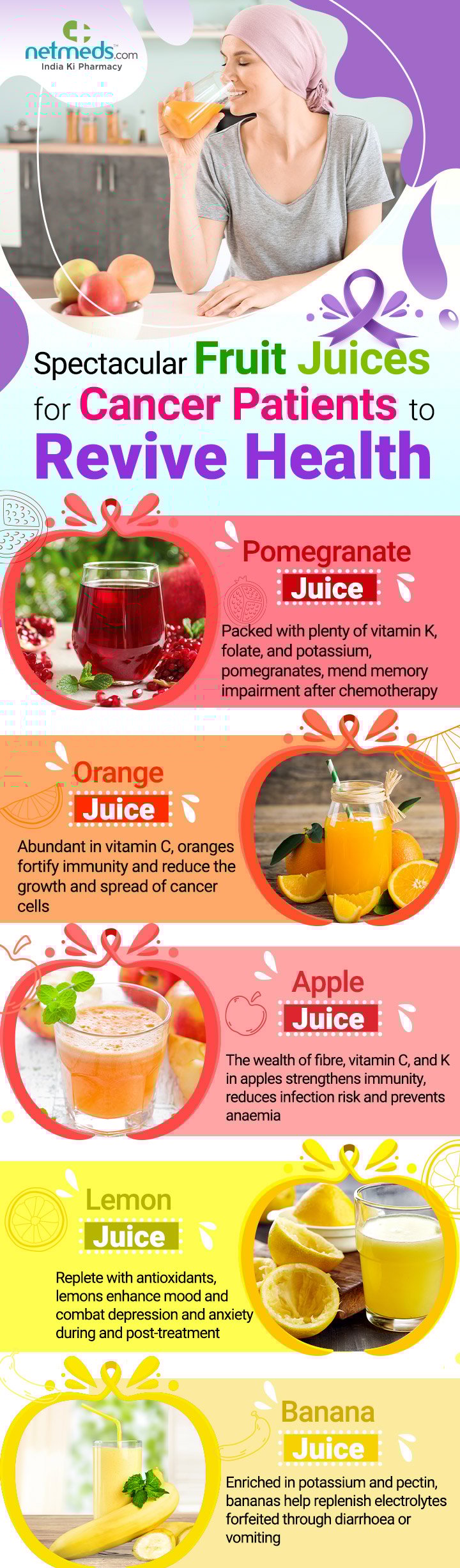
We curated 5 antioxidant-rich fruit juices to curb the side effects of cancer treatment and help ease your road to recovery.
Frequently Asked Questions
Which fruit juice is best for cancer patients?
Fresh fruit juices rich in antioxidants, vitamins C, and potent bioactive plant compounds may help support overall health during cancer recovery. Some of the best options include:
Pomegranate juice
Beetroot juice
Orange juice
Berry juice
Amla (Indian gooseberry) juice
However, cancer patients should avoid excessive sugar intake and preferably choose fresh, unsweetened juices. It is also important to consult a doctor or dietitian because some juices may interact with cancer treatments.
What are the 5 cancer-fighting foods?
Several foods contain nutrients and antioxidants that may help protect cells from damage and support overall health. Commonly recommended cancer-fighting foods include:
Broccoli and cruciferous vegetables contain sulforaphane and antioxidants.
Berries are rich in antioxidants and vitamin C.
Tomatoes contain lycopene, which supports cell protection.
Garlic and onions contain sulfur compounds linked to better immune function.
Green leafy vegetables provide fiber, folate, and protective plant nutrients.
What Foods Should You Eat While Recovering From Cancer?
During cancer recovery, the body needs foods that support healing, immunity, and energy levels. Helpful foods may include:
Protein-rich foods like eggs, fish, chicken, lentils, and beans.
Fruits and vegetables are rich in vitamins and antioxidants
Whole grains such as oats, brown rice, and whole wheat
Healthy fats from nuts, seeds, and olive oil
Hydrating foods like soups, fruits, and coconut water
Soft, easy-to-digest foods may also help if treatment causes nausea or mouth soreness. Small, frequent meals are often easier to tolerate.
What foods stop cancer cells from growing?
No single food can completely stop cancer cells from growing, but some foods contain compounds that may help support the body’s natural defense systems and reduce inflammation. These include:
Cruciferous vegetables like broccoli and cabbage
Turmeric containing curcumin
Green tea
Tomatoes
Garlic
Berries
Leafy greens
 Previous