Have you heard of Soursop? The Majority would say no. What is soursop, and why are we talking about it? Soursop is obtained from the evergreen forests of Africa, South America, and Southeast Asia. Annona muricata is the scientific name of graviola.
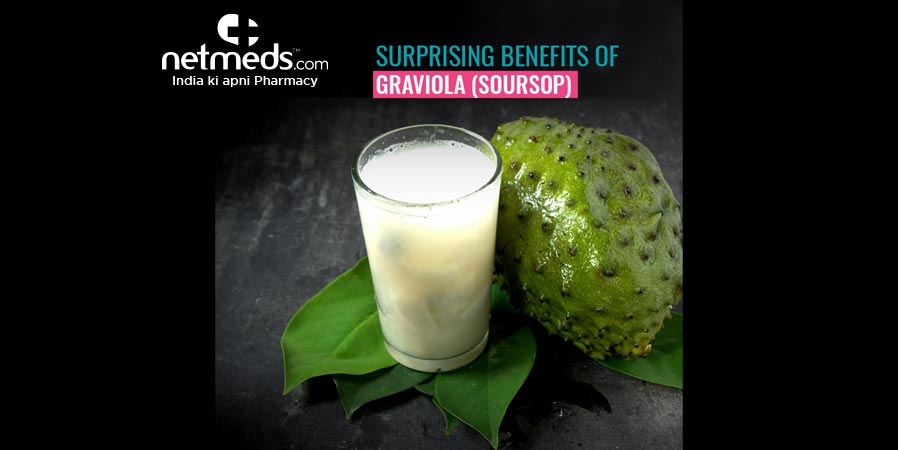
The most amazing fact about the fruit is almost all parts of the tree can be used medicinally, including the fruit, bark, and the leaves that contain the highest concentration of the active ingredient acetogenin. Graviola, guanabana, and Brazilian paw paw are some of the other names. Graviola is widely used to treat stomach complaints, hypertension, arthritis, rheumatism, depression, fever, and parasitic infections. Its most potent property is being anti-carcinogenic.
Nutritional Facts
Graviola is a low-calorie fruit that comes with an extremely impressive nutrient profile including vitamins C, thiamine, niacin, riboflavin, folate and minerals like potassium, magnesium, and iron. Some parts of the fruits possess strong medicinal properties that can be topically used to heal several skin woes. Many of the incredible benefits of soursop are credited to its high content of antioxidants. Luteolin, quercetin and tengeretin are some of the bioactive plant compounds present in soursop that works amazingly well in lowering the risk of several diseases including heart disease, cancer, and diabetes.
Graviola and Cancer
The top reason for graviola attracting scientific attention is its anti-cancer property. In fact, a study published in the Journal of Medicinal Chemistry (1997) found that soursop was more than 200 times as effective as chemotherapy when tested on breast cancer cells!
Evidence from the Tepic Institute of Technology (Instituto Tecnológico de Tepic ITT) in Mexico revealed acetogenins, a compound in the fruit with incredible chemotherapeutic properties.
The ITT researchers preserved the unprocessed soursop pulp by freezing up to a year without deterioration in the acetogenin content. They are also in the process of producing tasty juice, ice cream, and yoghurt they hope will prevent or fight the growth of cancer cells in people.
Journal of Nutrition and Cancer reveals that graviola (soursop) when taken as juice effectively inhibits the growth of breast cancer cells in patients without damaging healthy cells. It remarkably reduced the growth of tumours.
Researchers are learning more about the potential of graviola to fight other cancers including colon cancer, lung cancer, stomach cancer, and others. Consuming graviola in the regular diet helps improve your health and lowers the risk of certain cancers and even treat various forms of cancer by hindering tumour growth.
Soursop is loaded with folate, niacin, thiamine, vitamin C, calcium, magnesium, potassium, and fibre. The succulent fruit is also used in holistic medicine to treat stomach ailments, asthmatic problems, skin issues, gout, and fever.
Combats Bacteria
Evidence reveals that the potent antibacterial activity of soursop works effectively well to fight several types of bacteria, including the strains that cause gingivitis, dental decay, and yeast infections. Soursop extracts also worked against bacteria causing cholera and Staphylococcus infections. Even with these promising results, it’s essential to note that highly concentrated extract was used in test tubes, which is much greater than the amount we would get from the diet.
A word of caution:
Most of the studies have been conducted in vitro, not in mature systems; therefore, extensive clinical trials are required to study the association of soursop in cancer therapies, including slowing down the spread of cancer or aiding conventional chemotherapy to work better. The ideal way is to include soursop or graviola as a part of a healthy diet rather than a treatment option.
Frequently Asked Questions
What happens if I take soursop every day?
Eating soursop as a fruit in moderate amounts can add fiber, vitamins and antioxidants to your diet. However, frequent use of concentrated soursop leaf, seeds, or supplement products may pose health risks and should not be taken without medical advice.
What is the most beneficial way to consume soursop?
The safest way to enjoy its nutritional benefits is to eat the ripe fruit as part of a balanced diet, after removing the seeds. Avoid consuming soursop seeds, and be cautious with concentrated teas, extracts, and supplements.
Is soursop good for kidney patients?
Kidney patients should not assume that soursop is beneficial for their condition, as its potassium content and concentrated products may be unsuitable for some people.
What is the difference between soursop and graviola?
Soursop and graviola are two common names for the same tropical fruit, scientifically known as Annona muricata. Soursop is commonly used for the fruit, while graviola is used in supplement and herbal-product contexts.
What are the side effects of soursop graviola?
Eating the fruit in moderate amounts is generally considered different from taking concentrated graviola products, which may cause digestive upset or other adverse effects. Excessive or long-term graviola, particularly leaf or seed preparations, has raised concerns about potential neurological toxicity.
References:
https://pmc.ncbi.nlm.nih.gov/articles/PMC10093693/
https://horizonepublishing.com/index.php/PST/article/view/3035
 Previous