Menstruation, commonly known as a woman's period, is the regular release of mucosal tissue & blood from the inner lining of the uterus. Up to 80% of women report some warning signs in the time leading up to menstruation. Acne, tender breasts, bloating, feeling tired, food cravings, fatigue, irritability, and depression are symptoms of menstruation, and are termed as Premenstrual Syndrome (PMS) when they interfere with daily living activities.
Around 20% to 30% of women have moderate symptoms of PMS, while 3% to 8% have severe symptoms. The more severe form of PMS is known as Premenstrual Dysphoric Disorder (PMDD), with greater psychological symptoms, which affects an estimated 3% to 8% of premenstrual women.
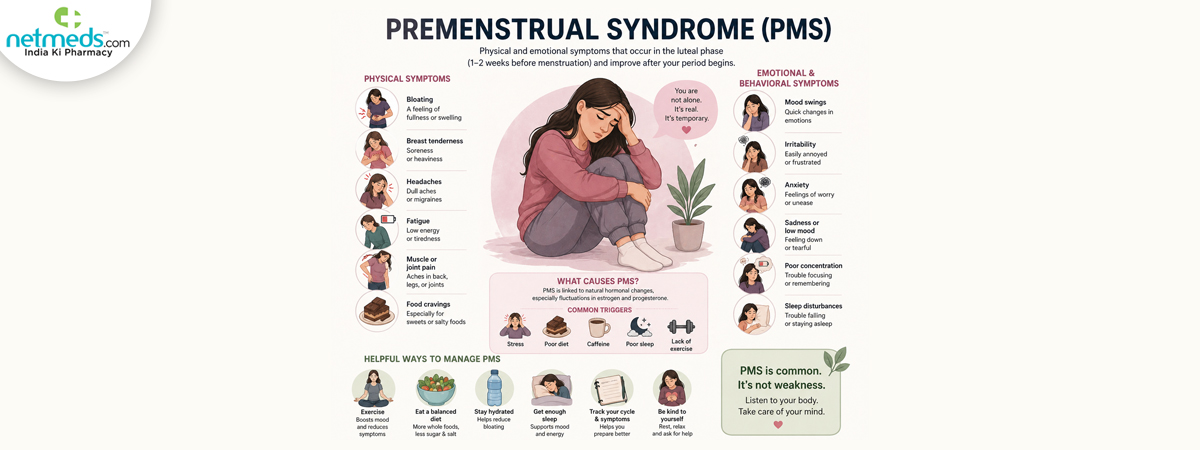
The physical and emotional symptoms of Premenstrual Syndrome need to occur consistently over a period of several months after ovulation and before menstruation, and need to be severe enough to interfere with daily living activities and tasks for a case of PMS to be diagnosed.
Premenstrual Symptoms
Many women may experience only a few of the potential symptoms:
Emotional and Behavioural Symptoms
- Tension or anxiety
- Depressed mood
- Crying spells
- Mood swings, including irritability or anger
- Appetite changes, i.e., food cravings
- Insomnia
- Social withdrawal
- Poor concentration
Physical Symptoms
- Joint or muscle pain
- Headache
- Weight gain related to fluid retention
- Abdominal bloating
- Breast tenderness
- Acne
- Fatigue
- Constipation or diarrhoea
The causes of Premenstrual Syndrome aren't known, though several factors may contribute to PMS:
- Premenstrual Syndrome reflects hormonal fluctuations but disappears during pregnancy and at menopause.
- Chemical changes in the brain, due to Serotonin, a neurotransmitter, thought to play a crucial role in mood states, could make PMS symptoms worse. Deficiency in serotonin levels may add to premenstrual depression, fatigue, food cravings and inability to sleep. Some women with Premenstrual Syndrome depression may have undiagnosed depression, though this isn't true for all women.
No laboratory tests or unique physical findings can determine a diagnosis of PMS, except for a consistent appearance of 3 factors:
- A woman's main complaint must include one or more emotional symptoms associated with PMS, such as irritability, tension, or unhappiness. Displaying only physical symptoms such as cramps or bloating is not enough cause for a diagnosis of PMS.
- Symptoms must appear regularly during the premenstrual phase, lessen or fade unfailingly immediately before or during menstruation, and shouldn't recur before or during ovulation.
- The symptoms must be severe enough to disrupt or interfere with the woman's everyday life.
For a diagnosis of Premenstrual Dysphoric Disorder, a woman & her gynaecologist must record her PMS symptoms over a period of several months.
Treatment
While dietary supplements such as calcium, vitamin B6, and vitamin E are recommended to reduce PMS & PMDD symptoms, some doctors recommend exercise to alleviate symptoms.
Anti-depressants such as fluoxetine, sertraline, paroxetine, and citalopram are prescribed continually or during the ovulation stage, depending on the severity of the symptoms.
Medications such as oral contraceptives or birth control pills interfere with ovulation and ovarian hormonal production. They are also used to treat PMDD.
Frequently Asked Questions
What Are Four Symptoms Of Premenstrual Syndrome?
Four common symptoms of Premenstrual Syndrome include:
Bloating
Breast tenderness
Fatigue
Other symptoms may include irritability, headaches, food cravings, and acne.
What Is The Cause Of Premenstrual Syndrome?
The exact cause of Premenstrual Syndrome is not fully understood, but it is mainly linked to hormonal changes during the menstrual cycle, especially fluctuations in estrogen and progesterone. Changes in brain chemicals such as serotonin may also contribute to mood-related symptoms.
When Do Premenstrual Syndrome Symptoms Start?
Symptoms of Premenstrual Syndrome usually begin 1 to 2 weeks before menstruation, during the luteal phase of the menstrual cycle. They often improve or disappear once the period starts.
What Is the 7-2-1 Rule for Menstruation?
The 7-2-1 rule is a general guideline to identify when menstrual bleeding may need medical attention:
7 bleeding lasts more than 7 days
2 soaking through a pad or tampon every 2 hours or less
1 needing to change protection during the night or experiencing significant disruption from heavy bleeding.
If these occur regularly, it is advisable to consult a gynaecologist.
References:
https://www.ncbi.nlm.nih.gov/books/NBK560698/
Premenstrual Syndrome
Pratyusha R. Gudipally; Gyanendra K. Sharma.
A Literature Review on Premenstrual Syndrome and Premenstrual Dysphoric Disorder
Suvidha S. Mane, Lalita S. Karne, Omkar A . Devade, Laxmikant M. Purane, Vivekkumar K. Redasani
https://rjppd.org/HTMLPaper.aspx?Journal=Research%20Journal%20of%20Pharmacology%20and%20Pharmacodynamics;PID=2025-17-1-7
 Previous