


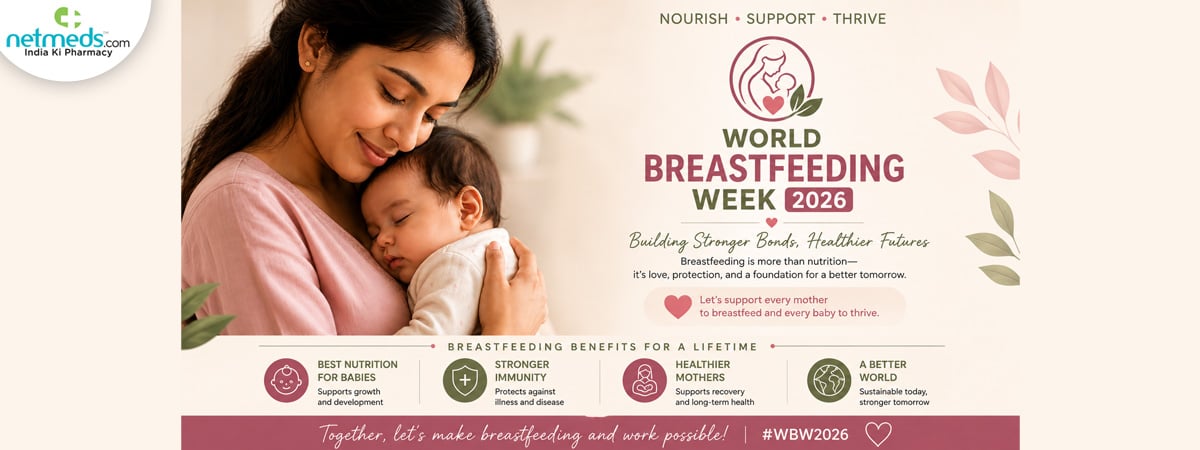
Although breastfeeding is considered one of the most beneficial and natural processes for both mother and newborn, it is often surrounded by a lot of misinformation, cultural background and poor support. Many new mothers face hardship in initiating and continuing breastfeeding owing to several reasons, including limited guidance, wrong perceptions of societal stigma and inadequate workplace provisions. To bridge the gap, World Breastfeeding Week (WBW)is observed every year from 1st to 7 th August, with an aim to highlight these issues and encourage efforts to create an environment where breastfeeding is highly established and normalised. This health event also emphasises how breastfeeding not only nourishes newborns but also contributes to healthier families, robust communities and a more sustainable planet.
Read this article to explore the theme, significance and practical measures to promote breastfeeding for a sustainable start in life.
World Breastfeeding Week 2026 Theme
The theme for World Breastfeeding Week 2026 is “Breastfeeding for a Sustainable Start in Life: Strengthen What Works,” which pays attention to tracking progress, evaluating impact and grading proven strategies that improve breastfeeding outcomes. This health campaign calls for governments, non-governmental organisations, medical experts, workplaces, communities, society and families to build on fruitful experiences and strengthen the “Warm Chain of Support” for breastfeeding.
Also Read: World Breastfeeding Week 2024: Theme, Significance And Essential Tips For New Moms
Why Is World Breastfeeding Week Important?
Breast milk is valued as the ideal source of nutrition for infants. It offers the right balance of nutrients, antibodies, protective enzymes and hormones that cannot be replicated by formula.
The WBW serves to:
Encourage awareness among the population of the many health and wellness benefits of breastfeeding.
Dispel the misconceptions surrounding breastfeeding.
Promote exclusive breastfeeding among mothers during the first six months.
Motivate lactating mothers to continue breastfeeding alongside complementary weaning foods up to two years or beyond.
Strategies, actions and plans that make breastfeeding effective for working mothers.
In addition, WBW 2026 reminds society that breastfeeding is a shared responsibility requiring continued support from families, employers, healthcare professionals, and policymakers.
Health Benefits Of Breastfeeding For Babies
Breast milk provides complete nutrition while strengthening the baby's developing immune system. Some of the key benefits include:
Mitigates the risk of diarrhoea and respiratory infections in newborns.
Safeguards the newborn against ear infections.
Promotes good cognitive functions and development.
Lessens the chance of childhood obesity.
Lowers the risk of type 1 and type 2 diabetes later in life.
Optimises healthy gut microbiome development.
Reduces the risk of allergies in some infants.
Benefits For Mothers
Breastfeeding delivers umpteen physical and emotional health benefits for mothers. These include:
Supports the uterus's return to its normal size after childbirth.
Promotes postpartum weight management by increasing calorie expenditure.
Reduces postpartum bleeding.
Lowers the risk of breast and ovarian cancer.
May decrease the risk of type 2 diabetes.
Strengthens emotional bonding with the baby.
Breastfeeding Supports A Sustainable Future
One of the most prominent messages of World Breastfeeding Week 2026 is that breastfeeding benefits not only families but also the environment.
Breastfeeding is naturally sustainable because it:
Requires no packaging or preserving of breastmilk.
Minimal waste.
Does not need any manufacturing resources.
Eliminates transportation emissions associated with formula production.
Conserves water and energy.
Supporting breastfeeding contributes to healthier populations while reducing environmental impact.
Practical Tips To Promote Breastfeeding
Initiate Breastfeeding Within The First Hour Of Birth
Evidence suggests that early skin-to-skin contact with mother and newborn supports lactation and helps successful breastfeeding practices. The baby’s first feed within the early hours of birth delivers beneficial colostrum, which is valued as liquid gold, loaded with rich antibodies and nutrients.
Exclusively Breastfeed For The First Six Months
Medical experts highly recommend exclusively breastfeeding babies for the first six months, unless medically advised otherwise. Continuous breastfeeding provides the baby with optimal nutrition and mitigates the risk of infections and illnesses.
Learn Proper Latching Techniques
A proper latching technique allows efficient milk transfer while avoiding nipple pain and soreness. If breastfeeding is painful or the baby finds it hard to feed, seek immediate guidance from a lactation specialist or healthcare provider.
Eating A Wholesome Diet/ Stay Hydrated
Breastfeeding mothers need additional nutrients such as calories, protein, vitamins, minerals, and adequate fluids to support lactation and promote growth. Ensure you are eating a balanced diet including a rich array of foods such as:
Whole grains
Fresh fruits
Seasonal vegetables
Lean proteins
Dairy or fortified alternatives
Nuts and seeds
Ample amounts of fluids
Improve Support System
Breastfeeding becomes natural when new mothers receive appropriate support and motivation from partners, family members, employers, and healthcare professionals. Joining breastfeeding support groups and seeking help early can improve confidence and breastfeeding success rate.
Myths Vs Facts About Breastfeeding
Myth
Small breasts produce less milk.
Fact
Breast size does not really determine the quantity of milk produced.
Myth
Formula is equal to breast milk.
Fact
Breast milk is heaped with beneficial antibodies and living immune cells that formula cannot reproduce.
Myth
Mothers should stop breastfeeding during a baby's mild illness.
Fact
Breastfeeding is known to help babies recover faster by offering stronger immune protection.
Myth
Breastfeeding always hurts.
Fact
Though initial discomfort may occur, constant pain usually indicates a latching problem that can be corrected.
Conclusion
World Breastfeeding Week 2026 serves as a reminder that breastfeeding initiates the basis for lifelong health while supporting a healthier and more sustainable future. By supporting early initiation, exclusive breastfeeding, good nutrition, a skilled support system and family involvement, we can help ensure that every newborn gets the best possible beginnings in life, while also promoting maternal health and environmental sustainability.
References:
https://www.who.int/campaigns/world-breastfeeding-week/2026
https://waba.org.my/wbw/
https://www.ibfan.org/wbw-2026-breastfeeding-for-a-sustainable-start-in-life/
https://pmc.ncbi.nlm.nih.gov/articles/PMC12391919/
Editorial: World breastfeeding week 2024: an obstetric and pediatric pharmacology perspective
Olusola Olafuyi 1, Amita Pansari 2, Philip O Anderson 3, Karel Allegaert 4,5,6,
 Previous