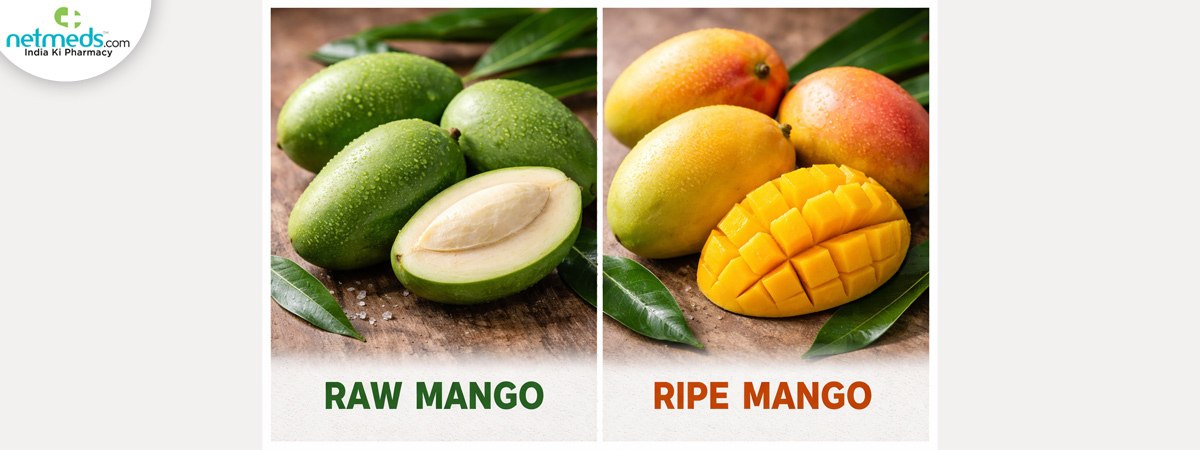
Come summer, the markets are filled with two of the most sought-after types of the same fruit, the tangy, firm raw mango (kacchi kairi) and soft, succulent, sweet ripe mango (pakka aam). Both these are derived from Mangifera indicia, but they differ remarkably in taste, nutrition and health benefits.
Shop From Our Broad Spectrum Of Supplements For Enhanced Physical Health
Raw mango is the unripe form of the fruit, green in colour, harvested before the starch is converted into sugar. It has a strong, sour flavour and firm texture. While riper mangoes undergo natural change where starch converts into sugar, making it sweeter, softer and packed with antioxidants.
Explore this article to understand how both types of mangoes affect your health and smarter ways to enjoy this mango season.
Nutritional Comparison Raw Mango vs. Ripe Mango
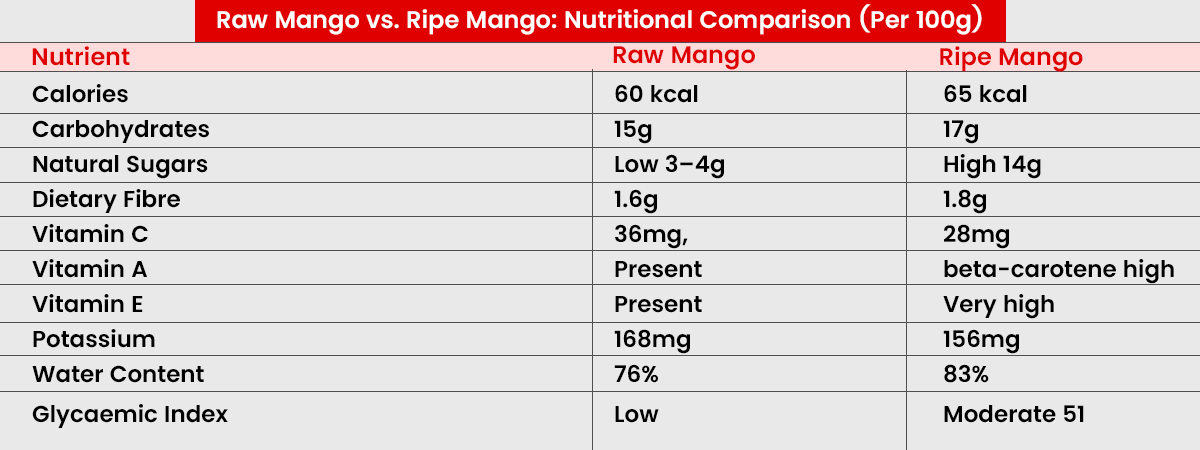
Verdict: Raw mango is an abundant source of vitamin C, low in sugar and supports weight loss. Ripe mango is rich in vitamin A, beta-carotene, natural energy and antioxidants.
Health Benefits of Raw Mango (Kacchi Kairi)
Prevents Heat Stroke/ Dehydration
Raw mango is India’s most valued summer natural cure. Loaded with potassium, magnesium and sodium content replenish fluids lost through sweating and restore electrolyte balance. Relishing aam panna is a traditional and science-backed way to avert heat exhaustion and dehydration in the sweltering summer months.
Boosts Immunity
A single 100g serving of raw mango offers approximately 40% of your daily Vitamin C requirement. Vitamin C supports white blood cell production, iron absorption, collagen synthesis, and protection against seasonal infections.
Promotes Gut Health
Ayurveda strongly vouches for raw mango for managing digestive disorders during summer. It contains pectin, a soluble dietary fibre, along with digestive enzymes that stimulate the secretion of bile acids and digestive juices. The perfect combination of dietary fiber and enzymes helps treat and prevent constipation, indigestion, acidity, heartburn, bloating, and nausea.
Also Read: 6 Amazing Health Reasons To Eat Raw Mango Every Day
Manages Weight
Raw mango is low in calories (around 60 kcal per 100g) and low in natural sugars, making it one of the most weight-friendly fruits you can eat. The goodness of fibre in raw mango promotes satiety, helping control appetite and reduce overall calorie intake. Several pieces of evidence have found that adults who consumed raw mango regularly showed lower BMI and waist circumference compared to non-consumers.
Promotes Heart Health
The vitamin B3, fibre, potassium, and magnesium in raw mango work together to optimise cardiovascular health. Pectin in particular helps lower LDL (bad) cholesterol by binding to it in the digestive tract and promoting its excretion.
Detoxifies the Liver
Raw mango triggers bile production and increases the liver's ability to absorb fat, helping flush out toxins and excess fat more efficiently. Ayurvedic practitioners have used raw mango to treat liver ailments and support hepatic function.
Good for Skin/Hair
Packed with vitamin C, raw mango helps with collagen production, which keeps the skin firm, youthful and radiant. Furthermore, it combats acne breakouts, fades away dark spots and pigmentation. The iron content supports healthy hair growth and prevents hair fall.
Manages Diabetes
Raw mango, being low in glycaemic index, does not spike blood sugar levels. People with diabetes can add raw mango to their regular diet as a snack or in aam panna without added sugar to prevent dehydration and stay energised.
Supports Eye Health
The Vitamin A content in raw mango supports retinal function and may help prevent night blindness and dry eyes.
Health Benefits of Ripe Mango (Pakka Aam)
Loaded With Vitamin A /Beta-Carotene
Ripe mango is one of the best dietary sources of beta-carotene, which the body converts into Vitamin A. This nutrient supports eye health, skin regeneration, immune function, and reproductive health. One cup serving (165g) of ripe mango provides nearly 10% of the daily recommended intake of Vitamin A.
Powerhouse of Antioxidants
As the mango ripens, it produces a storehouse of polyphenols, such as quercetin, isomangiferin, mangiferin, and gallic acid. These compounds safeguard cells from free radical damage linked to ageing, chronic inflammation, and cancer risk.
Boosts Energy Levels
The natural sugars such as fructose, sucrose, and glucose present in ripe mango serve as an instant source of energy. It is also an ideal pre-workout snack, post-illness recovery food, or energy booster during excess physical activity.
Supports Digestive Health
Ripe mango contains amylase enzymes that break down complex carbohydrates for easier digestion. The goodness of dietary fiber regularises bowel movement and improves digestive function. Research published in clinical studies shows that consuming ripe mango daily prevents constipation better than an equivalent amount of fiber supplement.
Promotes Skin/ Hair Health
Ripe mango is an impressive source of Vitamin A, Vitamin E, and beta-carotene, which make it excellent for skin health. Vitamin E is a fat-soluble antioxidant that protects the skin from UV damage, reduces inflammation, and hydrates the skin from deep within. On the whole, ripe mango is beneficial for dry skin, dull complexion, and treating hair brittleness.
Enhance Brain health
Ripe mango contains Vitamin B6 (pyridoxine), which is essential to produce serotonin and GABA, neurotransmitters that regulate mood, sleep, and stress.
Gut Microbiome Diversity
The prebiotic fibre in ripe mango feeds beneficial gut bacteria, supporting a healthy microbiome balance. A diverse microbiome is linked to better immunity, metabolic health, and a lower risk of chronic disease. This makes ripe mango a natural functional food for gut health.
Raw Mango Uses
Make refreshing aam panna, a classic Indian heat stroke remedy.
Kacchi kairi with salt and chilli or chaat masala sprinkled on raw mango is a traditional summer snack.
Raw mango chutney goes well with parathas and dal.
Mango dal (Mamidikaya pappu) is a tangy South Indian lentil dish using raw mango pieces.
Pickles and achar, preserved with mustard seeds, oil, and spices, a staple in every Indian household.
Ripe Mango Uses
Fresh slices are relished as a morning or mid-day snack.
Mango lassi made with yogurt, a pinch of cardamom, and chilled water is enjoyed as a refreshing drink.
Mango smoothie bowl with mixed fruit, coconut milk, and granola for a nutritious breakfast.
Mango kheer or halwa as seasonal dessert.
Frozen mango chunks are a healthy alternative to ice cream.
Side Effects
Raw Mango Side Effects
Eating large quantities of raw mango can cause diarrhoea, stomach pain, and indigestion due to its high acidity and tannins. Start with small portions.
Some people experience throat soreness or mild allergic reactions after eating certain raw mango varieties.
People suffering from acidity, excess body heat and mouth ulcers should limit intake of raw mango, as it can worsen these problems.
The sour flavour of raw mango may aggravate discomfort in individuals with joint-related issues or inflammatory conditions like gout.
Small children should consume raw mango in limited quantities, as it may cause stomach upset.
Ripe Mango Side Effects
A ripe mango is high in natural sugars and has a moderate glycaemic index. People with Type 2 diabetes should limit intake to half a cup (approximately 80–100g) at a time, and always pair it with protein (yogurt, nuts) to slow absorption.
One cup of ripe mango contains over 22g of natural sugar. Thus, excess intake can contribute to an increase in calorie consumption and weight gain, particularly when consumed at night.
Overconsumption of ripe mango can loosen stools due to its sugar content, especially in people with sensitive guts.
People with latex allergy may experience sensitive reactions like itching, hives, and swelling to mango skin and sap. Wash the mango thoroughly and peel carefully.
A few people may experience acne flare-up upon excessive intake of ripe mangoes, which is due to its high sugar and carbohydrate content increasing insulin and IGF-1 levels.
Frequently Asked Questions
Is Raw Mango Better Than Ripe Mango For Health?
Neither is universally "better." Raw mango has more Vitamin C, lower sugar, and is ideal for summer cooling, digestion, and weight management. Ripe mango has more Vitamin A, broader antioxidants, and is better for energy, skin health, and eye health.
Can I Eat Raw Mango Every Day In Summer?
Yes, in moderation. A serving of 100–150g of raw mango daily during summer is generally safe for most healthy adults.
Is Raw Mango Good For Diabetics?
Raw mango has a low glycaemic index and low sugar content, making it a better choice than ripe mango for people with diabetes.
Can I Eat Ripe Mango If I'm Trying To Lose Weight?
Ripe mango can be part of a weight-loss diet when eaten in moderation (about 100g per day). Choose fresh ripe mango over dried mango, mango juice, or mango-based desserts, which are far higher in sugar and calories.
Raw Mango or Ripe Mango: Which Is Healthier?
Both raw and ripe mangoes are wholesome and nutrient-dense fruits; they serve different uses. Raw mango is rich in Vitamin C, low in sugar, and ideal for summer cooling and digestion. Ripe mangoes are a good source of Vitamin A, beta-carotene, and a natural energiser. The choice depends on your specific health goal.
References:
Nutritional Composition and Bioactive Compounds in Three Different Parts of Mango Fruit
Veeranjaneya Reddy Lebaka 1, †, Young-Jung Wee 2,†, Weibing Ye 3,*, Mallikarjuna Korivi 3,*
https://pmc.ncbi.nlm.nih.gov/articles/PMC7830918/
A comparative review of phytoconstituents and major Pharmacological actions of pulp of ripe and unripe Mangifera indica L. fruits. December 2025, Journal of Food Measurement and Characterization
Amitesh Chakraborty, Tushar Adhikari
https://www.researchgate.net/publication/398366533_A_comparative_review_of_phytoconstituents_and_major_Pharmacological_actions_of_pulp_of_ripe_and_unripe_Mangifera_indica_L_fruits
 Previous