The monsoon season offers welcome relief from scorching heat. The lush greenery, a hot cup of chai, and cool breezes are real joy, unfortunately not just for us but also for the fungi on the skin! Though the rains refresh nature, they can create the perfect environment for a range of skin issues. The increased humidity, dampness, and prolonged exposure to moisture can create the perfect breeding ground for various skin problems. From fungal infections and itchy skin to rashes and acne flare-ups, monsoon-related skin problems can affect people of all ages.
Get Blemish-Free, Glowing Skin In Monsoon With Our Wide-Range of Skin Care Essentials!
The combination of intense humidity, perspiration, wet clothing, poor hygiene and exposure to contaminated water can weaken the skin’s natural defence barrier, making it easily vulnerable to bacterial, fungal, and allergic skin conditions.
Understanding the common monsoon skin problems and taking the right precautions can help you maintain healthy skin throughout the season.
Why Does the Monsoon Season Affect Skin Health?
During the rainy season, humidity levels rise significantly, causing the skin to produce excess sweat and oil secretion. When sweat remains trapped in skin folds or under tight clothing, it creates a warm and moist environment that encourages the growth of fungi, bacteria, and other microorganisms.
Common factors that increase the risk of skin problems during the monsoon include:
Excessive sweating
Wearing damp clothes or footwear
Poor air circulation around the skin
Walking through contaminated rainwater
Weakened skin barrier due to constant moisture
Poor personal hygiene
Common Monsoon Skin Problems
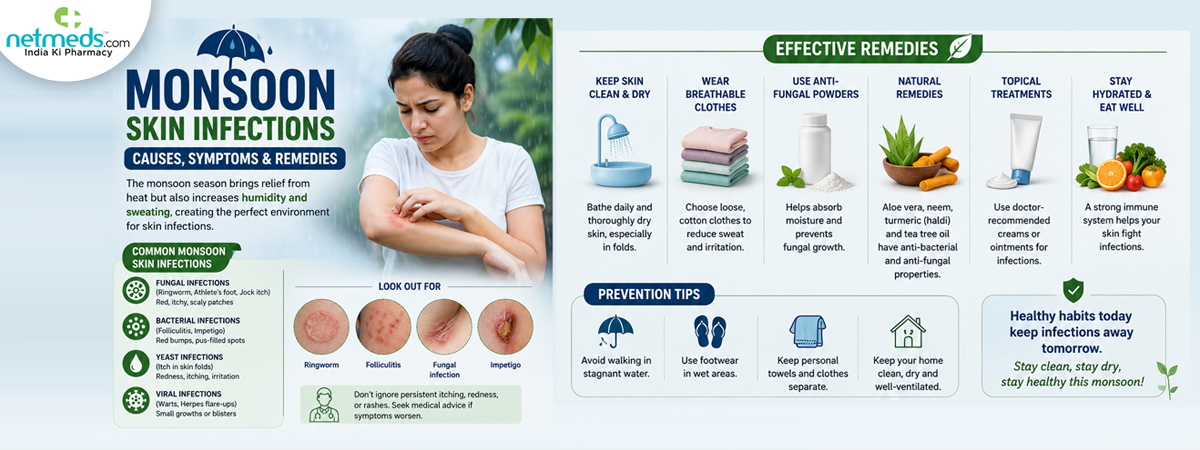
Fungal infections are among the most common skin problems during the monsoon. Warm and humid conditions encourage fungal growth, especially in areas where skin rubs together.
Common Types of Fungal Infections
Ringworm (Tinea) is characterised by circular, itchy, red patches with raised outer borders.
Athlete's Foot is a fungal infection affecting the feet, especially between the toes, causing itchiness, peeling and burning sensations.
Jock Itch affects the groin area and inner thighs, which leads to redness, itching and irritation.
Candidiasis is caused by Candida yeast, commonly affecting skin folds such as the armpits, under the breasts, and the groin. Persistent itching, red or scaly patches, peeling skin, a burning sensation or skin discolouration are the common symptoms.
Itchy Skin (Pruritus) is a very frequent issue during the monsoon season. Humidity, sweat accumulation, fungal infections, allergic reactions, and insect bites can trigger skin irritation.
Also Read: 5 Monsoon Skin Problems And Effective Tips To Remedy Them
Causes of Itchy Skin During Monsoon
Excessive sweating
Fungal infections
Allergic reactions to damp clothing
Mosquito and insect bites
Eczema flare-ups
Symptoms
Persistent itching
Redness
Dry patches
Small bumps or rashes
Skin irritation after sweating
Heat Rashes
Although commonly associated with summer, heat rashes can also occur during the monsoon due to blocked sweat glands.
Symptoms
Tiny red bumps
Prickly sensation
Skin irritation
Itching and discomfort
Acne and Oily Skin
The combination of humidity and increased oil production can clog pores and trigger acne breakouts.
Symptoms
Pimples
Blackheads
Whiteheads
Excess facial oiliness
Inflammation
Bacterial Skin Infections
Minor cuts and abrasions exposed to contaminated rainwater may become infected.
Signs
Redness
Swelling
Warmth around the affected area
Pain or tenderness
Pus formation
Who Is at Higher Risk?
Some people are more susceptible to monsoon-related skin infections, including:
Those with diabetes
Individuals with obesity
Athletes and fitness enthusiasts
An individual with poor immunity
People prone to excessive sweating
Individuals with eczema or sensitive skin
Effective Prevention Tips for Monsoon Skin Problems
Good Personal Hygiene
Regular bathing helps remove sweat, dirt, and microorganisms that can contribute to infections. Use a mild antibacterial or antifungal cleanser if recommended by a healthcare provider.
Maintain Skin Dry
Moisture is the biggest trigger for fungal growth.
Dry your body thoroughly after bathing.
Pay special attention to skin folds.
Change out of wet clothes immediately.
Wear Breathable Clothing
Choose lightweight, loose-fitting cotton fabrics that allow air circulation and reduce sweat accumulation.
Avoid Sharing Personal Items
Do not share towels, socks, footwear, or clothing, as fungal infections can spread through contaminated items.
Practice Proper Foot Care
Wear waterproof footwear on rainy days.
Wash and dry feet thoroughly.
Change socks regularly.
Keep the area between the toes dry.
Use Antifungal Powders When Needed
Antifungal powders may help reduce moisture accumulation in areas prone to sweating, such as the feet and groin.
Follow a Skin-Friendly Diet
A wholesome diet supports skin health and boosts immunity.
Include foods such as:
Citrus fruits
Berries
Leafy green vegetables
Nuts and seeds
Yogurt and probiotics
Stay Hydrated
Even during rainy weather, dehydration can affect skin health. Drinking adequate water helps maintain skin hydration and supports overall health.
Home Remedies for Mild Itchy Skin
While persistent symptoms require medical evaluation, mild itching may improve with:
Aloe Vera Gel exhibits potential skin soothing and cooling qualities that may help ease itchiness and irritation.
Oatmeal baths are a well-known remedy that can ease inflamed skin and relieve itchiness.
Applying a cold compress may ease itchiness and reduce discomfort temporarily.
Applying coconut oil may help moisturise dry, irritated skin and support the skin barrier mechanism.
When Should You See a Doctor?
Seek medical attention if you experience:
Severe itching
Rashes spreading
Persistent fungal infection
Painful skin lesions
Fever accompanying skin symptoms
Pus or signs of bacterial infection
Recurrent infections despite treatment
Prompt diagnosis and treatment can prevent complications and reduce the risk of spreading infections.
Frequently Asked Questions
Why Are Fungal Infections More Common During The Monsoon?
High humidity, excessive sweating, and prolonged skin moisture create favourable conditions for fungal growth, increasing the risk of infections during the rainy season.
How Can I Prevent Itchy Skin During The Monsoon?
Keeping the skin clean and dry, wearing breathable cotton clothing, staying hydrated, and avoiding prolonged exposure to damp environments can help prevent itchy skin.
Which Body Areas Are Most Prone To Fungal Infections?
Areas with skin folds and moisture accumulation, such as the groin, underarms, feet, and under the breasts, are particularly susceptible to fungal infections.
Does Rainwater Cause Skin Infections?
Rainwater itself may not directly cause infections, but exposure to contaminated water, prolonged dampness, and poor hygiene can increase the risk of bacterial and fungal skin infections.
Conclusion
Monsoon weather may be refreshing, but it also creates ideal conditions for fungal infections, itchy skin, heat rashes, and other skin concerns. Maintaining proper hygiene, keeping the skin dry, wearing breathable clothing, and adopting a healthy lifestyle can significantly reduce the risk of monsoon-related skin problems.
References:
https://pmc.ncbi.nlm.nih.gov/articles/PMC2856373/
SEASONAL VARIATION IN PEDIATRIC DERMATOSES
Sabyasachi Banerjee 1,✉, Dwijendra Nath Gangopadhyay 1, Sukumar Jana 1, Mitra Chanda 1
https://www.sciencedirect.com/science/article/pii/S0022202X23001707
 Previous