Trying to conceive can be an overwhelming yet emotional phase of life. While not getting pregnant immediately does not necessarily indicate a fertility issue, certain signs of female infertility may point to an underlying reproductive or hormonal problem that requires medical attention.
Generally, infertility may have various causes, including issues with ovulation, fallopian tube blockage, endometriosis, uterine conditions, hormonal imbalances and age-related changes. In a few cases, no specific cause is identified.
(To Optimise Your Reproductive Health And Functions, Shop From Our Broad Range Of Health Supplements)
Knowing the signs of infertility in women and understanding when to consult a doctor can help with timely evaluation and treatment.
What Is Female Infertility?
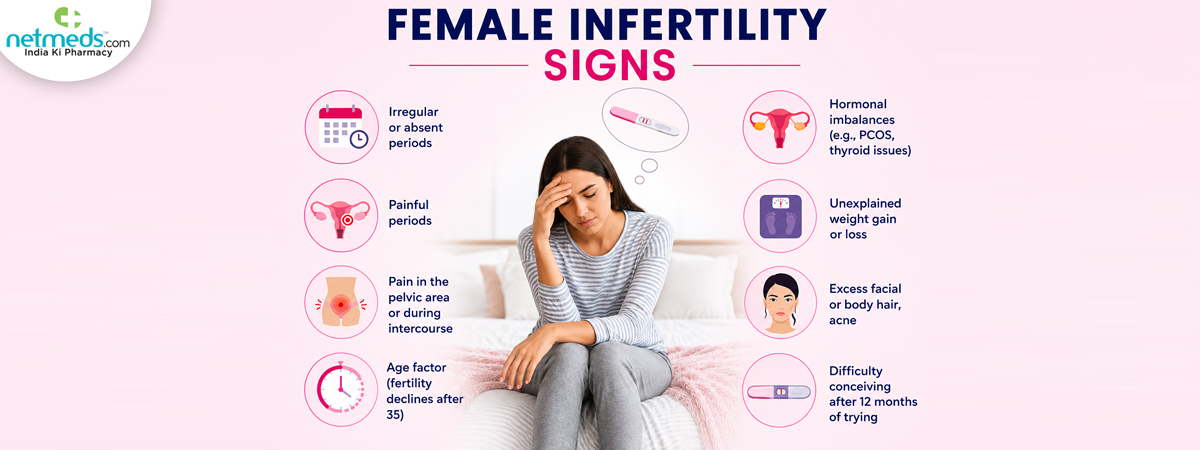
Female infertility develops when pregnancy doesn’t happen after 12 months of regular unprotected sexual intercourse or six months for women over 35. Women over 40 may need earlier intervention. Hormonal imbalances, anatomical concerns, chronic medical conditions, or lifestyle habits may be causes. Since symptoms often progress slowly, prompt detection is key to getting the right care and treatment.
Importantly, infertility is not always related to female reproductive issues. Fertility can be affected by other factors involving either partner, so evaluation of both partners may be recommended.
Female Infertility Symptoms to Watch Out For
Irregular or Absent Periods
Ovulation is vital for natural conception because it involves the release of an egg from the ovary. Any conditions that interfere with regular ovulation can make it difficult to become pregnant. Irregular periods are an important female infertility symptom that should not be ignored.
Very Heavy / Painful Periods
Extremely painful periods or unusually heavy bleeding may sometimes be related to conditions such as endometriosis or uterine abnormalities, which can affect fertility.
But painful or heavy periods do not automatically mean that a woman is infertile. They are one of the signs which need prompt consultation with a gynaecologist, especially when associated with problems conceiving.
Pelvic Pain
Regular pelvic pain, particularly pain that occurs during period cycles or sexual intercourse, may signal a medical evaluation. Conditions affecting the reproductive organs, including endometriosis, can sometimes cause pelvic pain and may be associated with infertility.
Pain During Sexual Intercourse
Some women may experience pain during sex, which is medically termed dyspareunia. This may be associated with pelvic or reproductive health problems.
If pain during intercourse is persistent, it is advisable to get help from your healthcare provider rather than assuming it is normal. Sexual dysfunction is also among the circumstances in which earlier fertility evaluation may be appropriate.
Unusual Vaginal Bleeding/ Discharge
Bleeding between periods or other unusual menstrual bleeding may indicate an underlying hormonal or reproductive health problem. Certain infections can affect the reproductive system and potentially contribute to infertility. Thus, any unusual discharge or abnormal bleeding should be monitored, particularly when associated with pelvic pain or difficulty conceiving.
Symptoms of Hormonal Imbalance
Hormonal imbalance usually affects ovulation and menstrual regularity. Depending on the underlying condition, symptoms may include:
Irregular or missed periods
Excess facial or body hair
Changes in weight
Hair thinning
Difficulty predicting ovulation
These symptoms can show up with numerous other medical conditions and do not by themselves confirm infertility. A healthcare provider can determine whether hormonal testing or further evaluation is appropriate.
Also Read: Women’s Health: 5 Must-To-Add Power Foods To Recharge And Nourish Reproductive Health
Becoming Pregnant Despite Regular Attempts
At times, there are no obvious signs of infertility in women apart from not becoming pregnant. If a couple has been having regular unprotected sex without conception for the recommended period, a fertility evaluation can help identify possible causes.
What Causes Female Infertility?
Ovulation Problems
Problems with ovulation are usually common causes of female infertility. Hormonal conditions such as those affecting the ovaries, thyroid or pituitary gland can impede ovulation.
Fallopian Tube Blockage
Blocked or damaged fallopian tubes can impede sperm and egg from meeting. Any previous pelvic infections, STDs, and endometriosis can lead to tubal damage or scarring.
Endometriosis
Endometriosis develops when tissue similar to the lining of the uterus grows outside the uterus. It can be associated with pelvic pain and infertility.
Uterine Problems
Conditions affecting the uterus, including certain fibroids, polyps or structural abnormalities, may interfere with conception or implantation.
Also Read: Fertility Yoga: Time-Tested Yogasanas To Treat Infertility Issues
Age-Related Fertility Decline
Fertility naturally declines with age and becomes more pronounced during the later reproductive years. Medical experts suggest that the fertility period starts to slow down in the early 30s and declines faster after age of 37.
When Should You See a Doctor?
You do not have to wait for 12 months; if you have symptoms or a known condition that could affect fertility, seek help from a gynaecologist or fertility specialist if:
You are under 35 and have not conceived after 12 months of regular, unprotected intercourse.
35 or older and have not conceived after 6 months of trying.
Over 40 and want to become pregnant.
Periods are consistently irregular or absent.
Have symptoms suggestive of endometriosis.
Have known or suspected problems involving the uterus, fallopian tubes or ovaries.
Have had previous treatment such as chemotherapy or radiation that may affect ovarian function.
Partner has a known condition that could affect fertility.
How Can You Improve Reproductive Health?
Well, not all causes of infertility can be averted; however, maintaining overall physical and mental well-being can promote fertility. A wholesome, balanced diet, regular physical activity, avoiding smoking, and restricting alcohol intake can help maintain reproductive health. In addition, a healthy weight is also important because being notably underweight or overweight may make conception more difficult.
It is also essential not to self-diagnose infertility based on a single symptom. Irregular periods, pelvic pain or hormonal symptoms may have several possible causes, and only appropriate medical evaluation can determine whether they are affecting fertility.
Conclusion
Finding out what’s normal for the human body versus what might be a sign of infertility is a key to conceiving earlier. Having a later period on an occasional basis or feeling lightly hormonal is usually not a great deal, but if you are regularly dealing with irregular periods, not ovulating, having pelvic pain or unusual hormonal changes, talk to your healthcare provider. Identifying female infertility issues early means a prompt and effective treatment plan and offers the best shot at having a baby.
References:
https://pmc.ncbi.nlm.nih.gov/articles/PMC9302705/
Diagnosis and Management of Infertility
A Review
Sandra Ann Carson 1, Amanda N Kallen 1
Author information
Copyright and License information
PMCID: PMC9302705 NIHMSID: NIHMS1804691 PMID: 34228062
https://www.ncbi.nlm.nih.gov/books/NBK556033/
Female Infertility
Omoniyi Y. Adebisi; Manvinder Singh; Kyle J. Tobler.
 Previous