


Cat’s Claw, scientifically known as Uncaria tomentosa, is a powerful medicinal herb sourced from the lush rainforests of Central and South America. Named after its distinctive claw-shaped thorns that resemble a cat’s claws, this traditional herbal remedy has been widely used for centuries in Ayurvedic and indigenous medicine to support overall wellness. Rich in antioxidant and anti-inflammatory compounds, Cat’s Claw is gaining popularity as a natural supplement for immune support, joint health, digestive wellness, and skin health benefits.
Known for its potential to boost immunity, reduce inflammation, and promote healthy skin, Cat’s Claw herb continues to attract the attention of researchers, herbalists, and health-conscious individuals worldwide. From supporting the body’s natural defense system to helping maintain youthful, radiant skin, the benefits of Cat’s Claw make it a sought-after botanical in the world of natural health and wellness. This article explores the traditional uses, health benefits, skin benefits, and medicinal properties of Cat’s Claw herb in detail.
What Makes Cat’s Claw Beneficial?
The adaptogenic qualities and antioxidant properties of this rare plant make it a subject of interest in the world of natural health and wellness. Below are some of its holistic benefits:
- Among its many traditional uses, Cat’s claw is renowned for its immune-boosting properties. It has been traditionally used to combat infections, reduce inflammation, and aid in wound healing.
- The herb has gained popularity in modern herbal medicine and dietary supplements for its potential to support the immune system and promote overall well-being.
- Rich in bioactive compounds like alkaloids and flavonoids, it is known to fortify the immune system, helping the body fend off infections and diseases.
- Cat’s claw is celebrated for its anti-inflammatory properties. These properties can offer relief to individuals grappling with inflammatory conditions like arthritis and gastrointestinal disorders. The herb's ability to reduce inflammation is linked to its potential to inhibit pro-inflammatory molecules.
- Cat’s claw's impressive antioxidant content helps combat oxidative stress and free radicals, contributing to overall well-being and potentially lowering the risk of chronic diseases.
- It is helpful in pain management and may possess analgesic properties, making it a potential natural remedy for various types of pain, including joint and muscle discomfort.
- Cats' Claw supports cognitive function, cardiovascular health, and digestive well-being, and even aids in cancer treatment by boosting the immune system and mitigating chemotherapy side effects.
A Word Of Caution
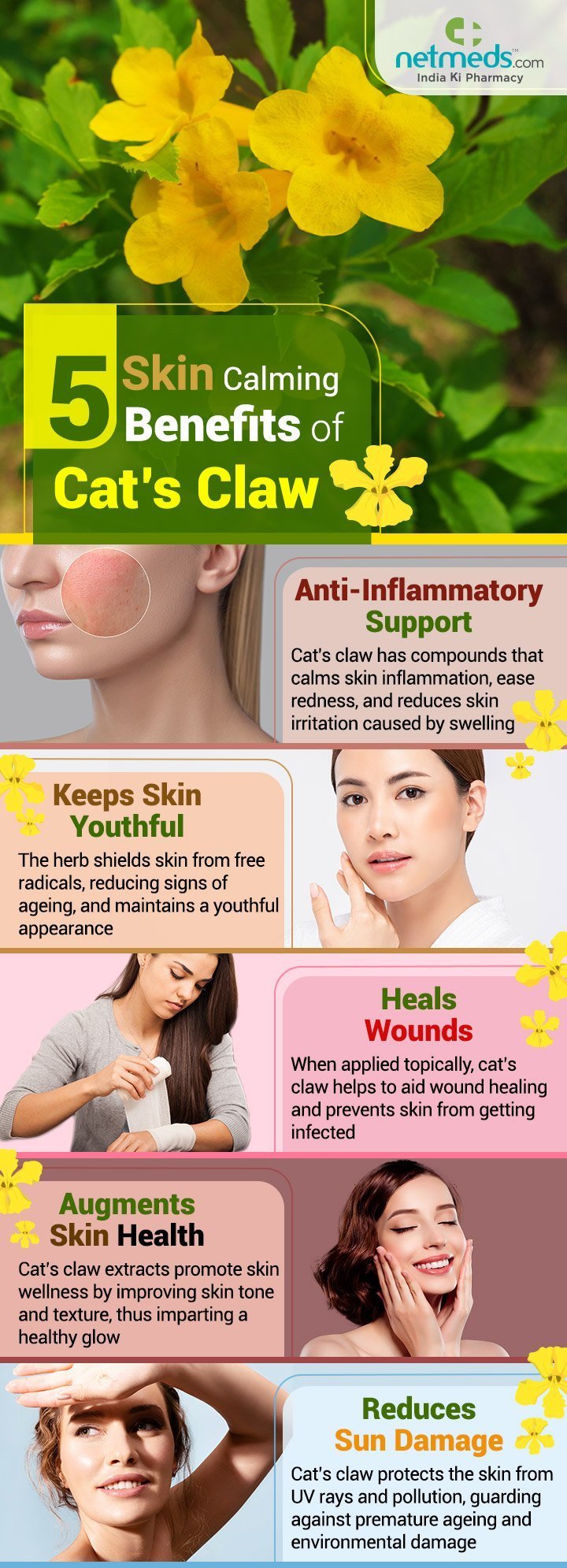
It is always crucial to exercise caution when considering cat’s claw supplements or extracts, as they may interact with certain medications or have contraindications for specific health conditions. Always seek guidance from a healthcare professional before incorporating it into your health regimen to ensure safe and effective usage. To know the skin healing benefits of this sassy herb, foray into this infographic
Frequently Asked Questions
What Is Cat’s Claw Herb Used For?
Cat's Claw is commonly used for immune support, reducing inflammation, supporting joint health, and improving digestive wellness.
What Does A Cat’s Claw Do For Skin?
Cat’s claw may help reduce inflammation and oxidative stress, which can support healthier-looking skin and tissue repair.
Can I Take Cat’s Claw Every Day?
Many people take cat’s claw daily in moderate amounts, but long-term use should be discussed with a healthcare professional, especially if you take medications or have health conditions.
What Are The Negative Side Effects Of Cat’s Claw?
Possible side effects include nausea, dizziness, headache, stomach upset, and low blood pressure. It may also interact with certain medications.
Is Cat’s Claw Anti-Ageing?
Cat’s claw is considered anti-ageing because of its antioxidant and anti-inflammatory properties, but scientific evidence is still limited.
References:
https://pmc.ncbi.nlm.nih.gov/articles/PMC7657399/
https://www.sciencedirect.com/science/article/abs/pii/S094471130470121X
 Previous


