


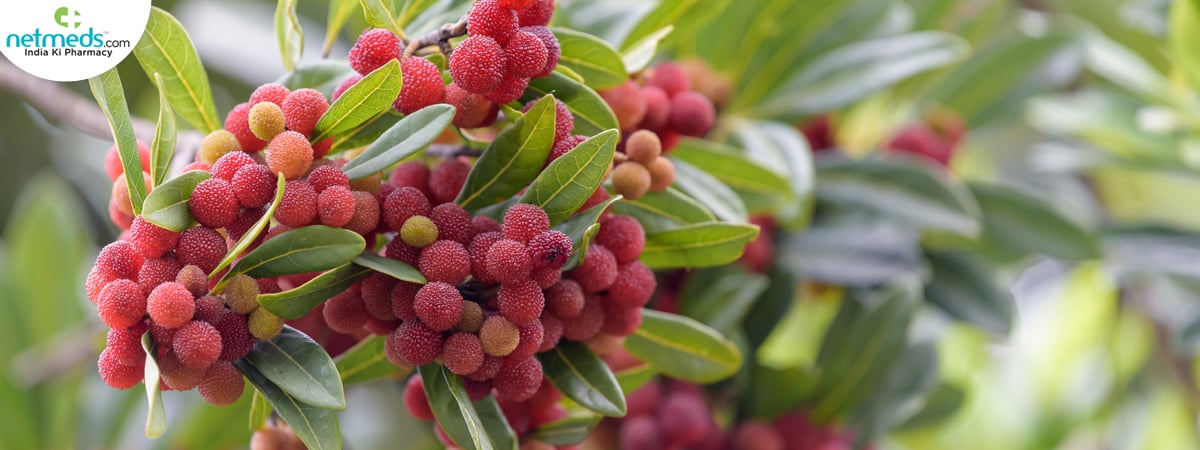
Have you ever seen a deep purple berry being sold on Indian roadsides during your summer visits to North Indian regions? A round version of strawberry but with a perfect blend of sweet and sour, Bayberry, scientifically known as Myrica Esculenta is commonly found in the forests of the Himalayan foothills, as well as in parts of China, Bhutan, Malesia, and Nepal. In India, it is also found in the regions of Garhwal and around the Himalayan region of Himachal Pradesh. Also called box myrtle and Kaphal, it is harvested from the wild tree. With a rich history of medicinal and culinary uses dating back centuries, Indian bayberry is highly valued for its nutritional properties and health benefits.
What Makes Bayberry/Kaphal Special?
A medium-sized bayberry tree produces small, round fruit that is dark purple or black when ripe. Indian bayberries contain essential nutrients like riboflavin, thiamine, carotene, and vitamins C, A, and E. Moreover, Bayberries contain a powerful group of antioxidants called oligomeric proanthocyanidins (OPCs), which help fight free radicals in the body. And the best part is one Bayberry contains only 6 calories!
Also Read: Water Apple: Health Benefits, Nutrition, Uses For Skin And Hair, Recipes, Side Effects
Nutrition In Indian Bayberry/Kaphal
Here is the nutritional profile of Kaphal (per 100 grams):
- Calories: 71
- Carbohydrates: 16 grams
- Protein: 1.4 grams
- Fat: 0.3 grams
- Dietary Fiber: 3 grams
- Vitamin C: 32 milligrams
- Vitamin A: 87 micrograms
- Iron: 1.6 milligrams
- Calcium: 52 milligrams
- Potassium: 428 milligrams
Health Benefits Of Kaphal
Not only extremely low in calories, but kaphal is also rich in nutrients with the following health benefits:
Combats Free Radicals
Bayberries are a powerhouse of antioxidants, such as flavonoids and polyphenols, which help neutralize harmful free radicals in the body. Regular consumption of Indian bayberry can avert the risk of chronic diseases, including cancer and cardiovascular disorders.
Bolsters Immunity
Vitamin C is known to enhance the body’s immune support. Indian bayberry has a high amount of this vitamin. By helping to stimulate the production of white blood cells, which play a crucial role in fighting off infections and diseases, kaphal helps to strengthen the immune system.
Promotes Digestive Health
Since antiquity, kaphal has traditionally been used to promote digestive health. The dietary fibre in the fruit helps aid digestion and prevents constipation. Additionally, it also possesses laxative properties, making it beneficial for maintaining regular bowel movements.
Fortifies Bone Health
The luscious berries exhibit anti-inflammatory properties, which can help reduce inflammation in the body. This makes it beneficial for individuals suffering from conditions such as arthritis and joint pain.
Upkeeps Heart Health
Phytochemicals and antioxidants present in kaphal can help to improve cardiovascular function. Thus, consuming Indian bayberry may contribute to heart health due to its ability to lower cholesterol levels and regulate blood pressure. This can reduce the risk of heart disease.
Ideal For Weight-Watchers
With very few calories per serving, Kaphal may support weight management efforts. The fibre content can help to promote a feeling of fullness. Additionally, the berries have a low glycaemic index, which may help stabilize blood sugar levels and prevent sudden spikes in insulin.
Shop From Our Wide Range Of Health Supplements
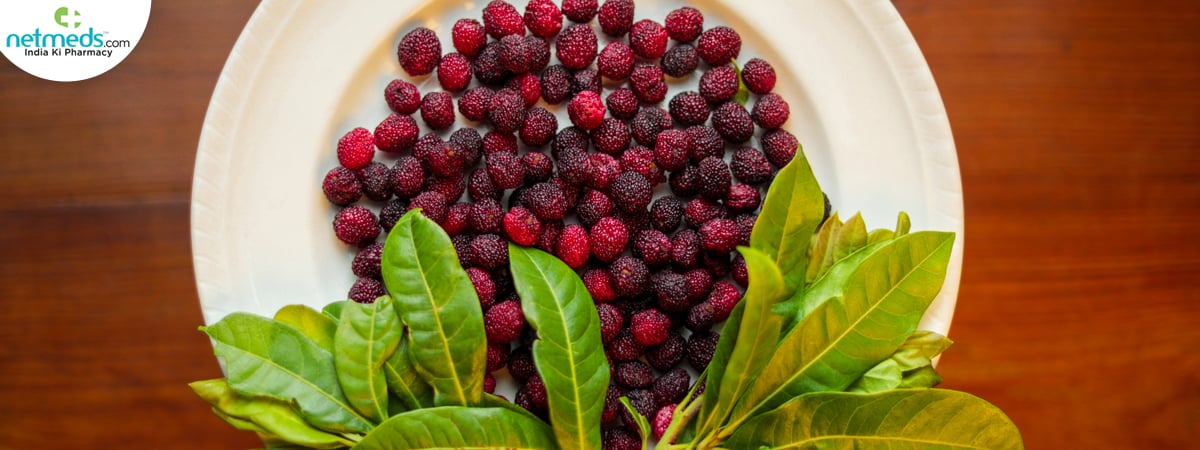
A nutrient-dense fruit with numerous health benefits, undoubtedly, bayberry is a valuable addition to any diet and promotes overall well-being. Whether you consume it fresh or incorporate it into various culinary dishes, the wild purple berry is a nutritious way to enhance overall well-being. If you come across this delicious tangy fruit, relish it raw or make the following recipe:
Kaphal Chutney
Ingredients
- 2 cups fresh bayberries
- 1 cup jaggery
- 1 tbsp grated ginger
- 1 tbsp lemon juice
- 1/2 teaspoon roasted cumin powder
- 1/4 teaspoon red chili powder
- Salt to taste
Method
- Rinse the fruit
- In a pan, combine the bayberries, grated ginger, jaggery, lemon juice, roasted cumin powder, red chili powder, and a pinch of salt
- Cook the mix over medium heat, stirring until the bayberries soften and release their juices
- Use the back of a spoon to gently mash the bayberries allowing the seeds to get separated from the flesh
- Continue to cook until the chutney thickens to your desired consistency
- Adjust the sweetness and seasoning according to your taste preferences by adding more jaggery, lemon juice, or salt if needed
- Remove the seeds carefully
- Transfer the bayberry chutney to an airtight container
Nutrition
Enjoy the tangy and sweet homemade bayberry chutney that boasts of all essential nutrients and contains antioxidants, thus helping to promote immune health and prevent mild to chronic diseases.
Frequently Asked Questions
What Are The Benefits Of Bayberry Fruit?
Bayberry fruit provides vitamin C, antioxidants, and other plant compounds that may support immune health and help protect cells from oxidative stress. It also contains fibre, which can support healthy digestion when eaten as part of a balanced diet.
Are Bayberry And Kafal The Same?
Bayberry and Kafal can refer to the same or closely related Himalayan fruit, depending on the region and local naming. In India, Kafal commonly refers to Myrica esculenta, also known as Himalayan bayberry.
Can Diabetics Eat Bayberry?
People with diabetes may be able to enjoy bayberry in moderate portions as part of a balanced diet, but it still contains natural sugars and carbohydrates. Monitor portion size and blood glucose response, especially if you have difficulty managing your blood sugar.
References:
- An overview of the nutritional value, health properties, and future challenges of Chinese bayberry
Shuwen Zhang, Zheping Yu, Li Sun, Haiying Ren, Xiliang Zheng, Senmiao Liang
https://www.ncbi.nlm.nih.gov/pmc/articles/PMC8900607/
- https://www.sciencedirect.com/science/article/pii/S1319562X17302231
 Previous


