


Smooth, robust and dense tresses not only enhance beauty, but are also a sign of good health. However, in the present day and age, hair fall problems are becoming increasingly common, affecting both men and women alike. In addition to genetic anomalies and environmental pollutants, unhealthy diet, sedentary lifestyle, hectic work schedules, mental stress, insomnia all contribute towards the weakening of the mane at the roots and frequent shedding of strands.
Also Read: Ayurveda For Insomnia: Time-Tested Therapies For A Good Night’s Sleep
Ayurveda defines hair loss as “Khalitya” under the category of “Shiroroga”, meaning diseases of the head and scalp. The primary reasons for the rampant falling of hair are an imbalance in the three doshas – vata, pitta and kapha, coupled with an aggravation of tejas dhatu, also called ushna or agni, i.e. body heat.
Furthermore, factors like tobacco smoking, alcohol consumption, UV rays from sunlight, irregular sleep patterns, abnormal bowel movements, too much salt intake, erratic mood swings result in the decline of hair health. Subsequently, injuries in the surface of the scalp, coupled with dryness, itching, flaking, lack of blood flow, clogging of follicles with harmful toxins occur, prompting bald patches and falling of hair.
Ageing is a gradual process and the falling of a few strands of hair on a daily basis is a natural phenomenon, especially in people 50 years and older. However, the issue of severe hair loss in undue amounts, particularly in teenagers, young adults and middle-aged individuals, is certainly not permanent, which can be effectively treated and reversed.
Of course, adhering to a wholesome balanced diet, getting adequate rest, avoiding prolonged sun exposure, engaging in routine physical activity and steering clear of addictions, bad habits is key. For this augments the supply of essential nutrients and sustenance to hair roots i.e. follicles, as well as scalp, shafts and strands, from within.
But there exist a treasure trove of pure botanical elements procured from plants, that can be used for external application on the scalp and mane, to prominently arrest hair fall. These can be unearthed in Mother Nature, who offers a multitude of flora – right from barks, stems, to leaves, flowers, which have astounding medicinal properties to augment the growth of hair. Also Read: 7 Incredible Hair Growth Tips For Healthy, Long And Lustrous Tresses
Moreover, the ancient Ayurvedic manuscripts Of Charaka Samhita, Sushruta Samhita provide insights into obtaining these herbal extracts, to significantly alleviate the condition of Khalitya. Read on, to discover some time-tested natural concoctions, to cease hair fall and enrich the growth, texture of the locks.
Spectacular Ayurvedic Remedies To Heal Hair Fall Woes:
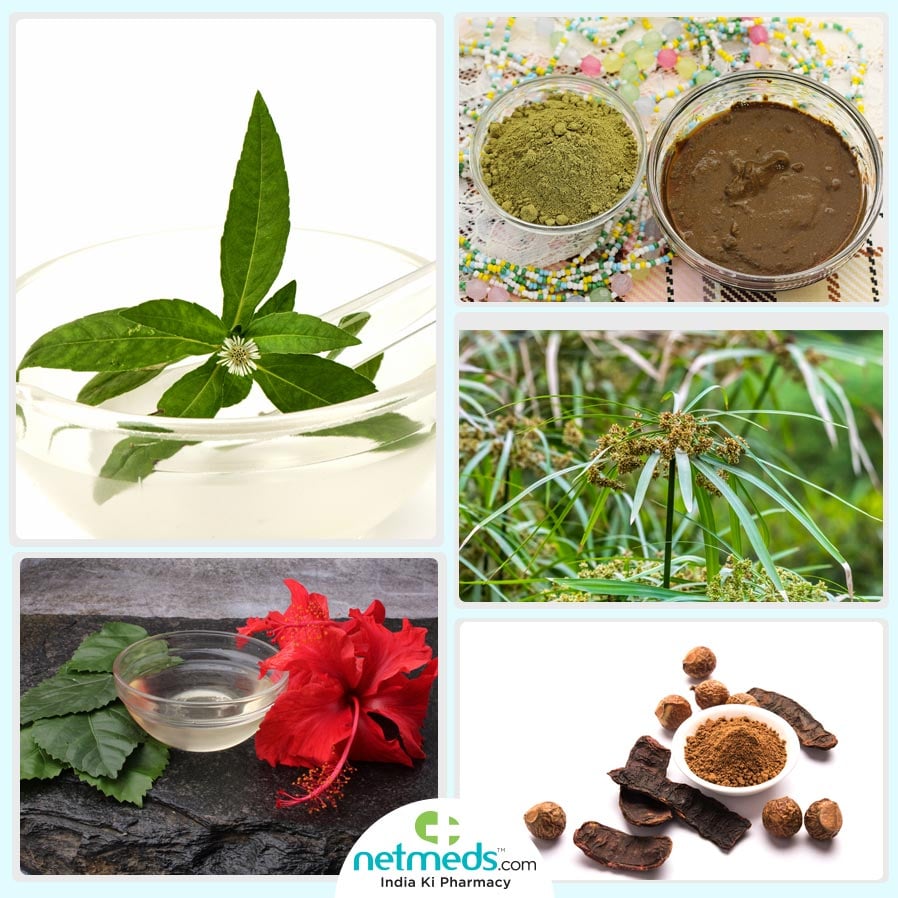
Henna
Henna, also called mehendi, comprises vast reserves of vitamin E and catechins, that hold excellent antioxidant properties, to rid the strands of detrimental free radicals and revitalize hair.
Mix some henna powder with fresh yoghurt and spread all over the head as a hair mask. Wash off with water after 1 hour, for cooling the body and reviving hair growth.
Nagarmotha
Known in English as nutgrass, nagarmotha possesses an intrinsic pitta and kapha balancing potential, besides hair-fortifying minerals, to cure dry aspects of the scalp and nurture the follicles.
Apply an even layer of nagarmotha oil on the hair and scalp. Leave it on for 30 minutes then wash off with a shampoo, for hydrated, lengthy curls of hair.
Shikakai
Aptly titled as soap pod, shikakai is renowned for its noteworthy advantages in stimulating hair growth, thanks to its cleansing saponin antioxidants, that also promote smooth texture of the mane.
Prepare a paste with shikakai powder and water. Dab a generous layer on the hair and scalp. Let it stay for 20 minutes and rinse off with cold water, for thick, strong and glossy tresses.
Rudrapushpa
Seen in bright hues of red and pink, the oil distillates of rudrapushpa or hibiscus flowers contain tremendous elements like minerals, healthy fats and antioxidants, to maintain hair wellness.
Massage the head, scalp and hair with rudrapushpa oil at least 2 – 3 times a week, for infusing an intense dark colour back to grey strands and rectifying hair fall concerns.
Bhringaraj
A popular ingredient in many commercially available shampoos and conditioners, bhringaraj or false daisy juice residues are imbued with flavonoids, terpenoids, thereby being touted as a panacea for all hair-related woes.
Firmly rub all regions of the scalp, as well as hair from root to tips, with bhringaraj oil regularly, for reinforced and rejuvenated locks, sans dryness and hair fall.
Frequently Asked Questions
Can Ayurveda help reduce hair loss naturally?
Yes, Ayurveda focuses on addressing the root causes of hair fall by balancing the doshas, nourishing the scalp, and supporting healthy hair growth through herbs, diet, and lifestyle modifications. While many Ayurvedic herbs show promise, larger clinical studies are still needed to establish their effectiveness.
Which Ayurvedic herbs are best for hair growth?
Popular Ayurvedic herbs for hair health include Bhringraj, Amla, Brahmi, Neem, Hibiscus, Fenugreek, and Shikakai. These herbs are traditionally used to strengthen hair follicles, improve scalp health, reduce dandruff, and promote thicker, healthier hair.
How does Bhringraj benefit hair?
Bhringraj is often referred to as the "King of Herbs" for hair in Ayurveda because it may help nourish hair roots, reduce hair shedding, and support healthy hair growth when used regularly as part of a hair care regimen.
Can Ayurvedic herbs help with dandruff and scalp infections?
Yes, herbs like Neem, Tulsi, and Shikakai possess cleansing and antimicrobial properties that may help reduce dandruff, soothe scalp irritation, and maintain a healthy scalp environment.
How long does Ayurveda take to show results for hair loss?
Hair growth is gradual, and noticeable improvements typically require consistent use of Ayurvedic herbs and healthy lifestyle practices for several weeks to a few months, depending on the underlying cause of hair loss.
References:
1.Ayurvedic Treatments for Hair Disorders: A Narrative Review (2025)
https://doi.org/10.1159/000549251
2.Pathophysiology, Conventional Treatments, and Evidence-Based Herbal Remedies of Hair Loss With a Systematic Review of Controlled Clinical Trials
https://pmc.ncbi.nlm.nih.gov/articles/PMC12678491/
3.A Review on Hair Growth Promoting Herbal Drugs
https://irjay.com/index.php/irjay/article/view/971
4.A Review of Herbal Medications for the Treatment of Alopecia
 Previous