


Most of us are aware that Insomnia is a sleep disorder. People with Insomnia find it difficult to fall asleep or stay asleep. Most common symptoms of Insomnia are daytime sleepiness, allergies, irritability, stress, lethargy, mood swings, being unwell both mentally and physically and anxiety.
General causes of Insomnia:
- Physical and psychological factors
- Disruptions in the 24-hour cycle in the physiological processes occurring from external noises in the environment, irregular shift timings at work, extreme heat or cold and high altitudes
- Disorders such as bipolar disorder, depression, anxiety or psychotic disorders
- Medical conditions such as Parkinson's and Alzheimer's diseases, brain lesions, tumours, asthma, sleep apnea and other chronic diseases
- Hormonal imbalances and other physiological conditions
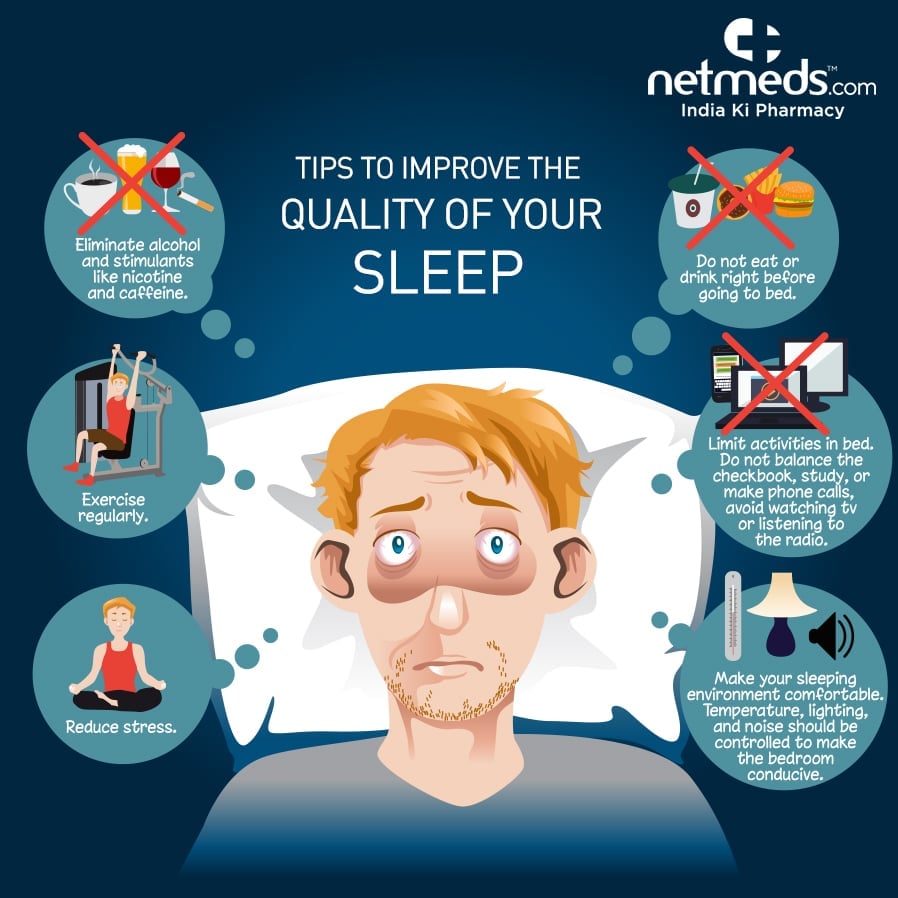
The good news is that Insomnia is curable. Try these 9 tips to beat this disease:
- Follow a regular schedule, wake up and go to bed at the same time every day
- Reduce intake of alcohol, nicotine and caffeine
- Reduce exposure to light or electronic gadgets at least an hour before bed
- Avoid taking naps in the afternoon
- Eat a light dinner, and go for a walk after dinner. You will get tired and this will help you fall asleep faster
- Reduce anxiety, stress, tensions, and other disturbing thoughts
- While sleeping, make sure the room is soundproof
- Try meditation, yoga and light medication if necessary
- Ensure you eat wholesome and healthy food
Frequently Asked Questions
How To Get 100% Sleep Quality?
While achieving a perfect 100% sleep score every night is unrealistic, you can improve sleep quality by maintaining a consistent sleep schedule, creating a cool and dark sleeping environment, limiting caffeine and alcohol before bedtime, avoiding screens at least an hour before sleep, exercising regularly, and managing stress through relaxation techniques such as meditation or deep breathing.
What Is The 3-3-3 Rule For Sleep?
The 3-3-3 rule is a simple guideline to improve sleep:
3 hours before bed: Stop eating heavy meals and avoid alcohol.
3 hours before bed: Avoid intense exercise.
3 minutes before bed: Practice relaxation techniques such as deep breathing or mindfulness to calm the mind and prepare for sleep.
What is the 10-4-3-2-1 rule?
The 10-4-3-2-1 rule is a popular sleep hygiene strategy:
10 hours before bed: No caffeine.
4 hours before bed: No alcohol and heavy meals.
3 hours before bed: No vigorous exercise.
2 hours before bed: Stop work-related activities.
1 hour before bed: Avoid screens and electronic devices.
Following this routine may help you fall asleep faster and enjoy more restful sleep.
Is 9:30 PM to 4:30 AM enough sleep?
Sleeping from 9:30 PM to 4:30 AM provides 7 hours of sleep, which falls within the recommended range of 7–9 hours for most healthy adults. However, individual sleep needs vary. If you wake up feeling refreshed, alert, and energetic throughout the day, 7 hours may be sufficient.
 Previous